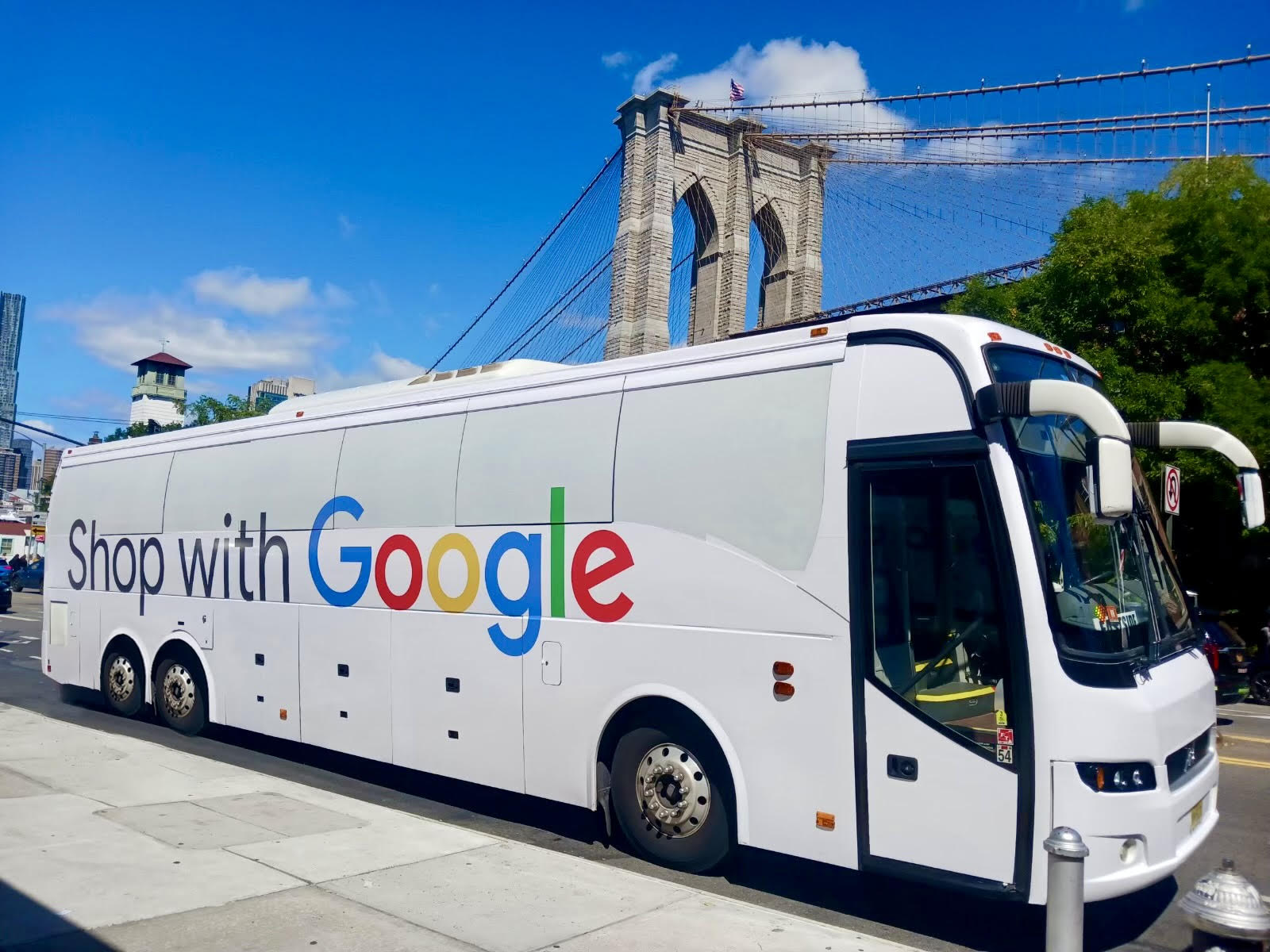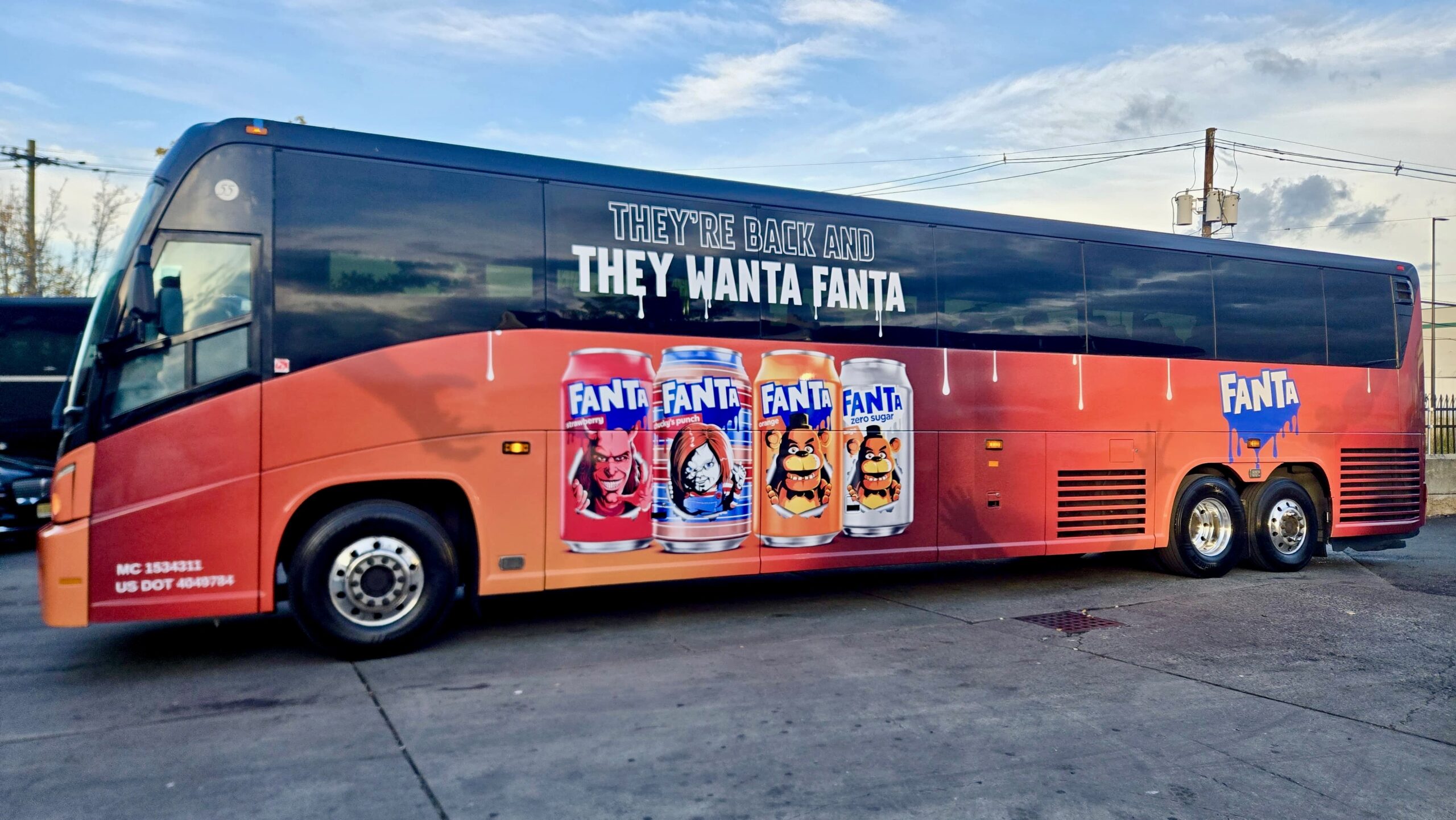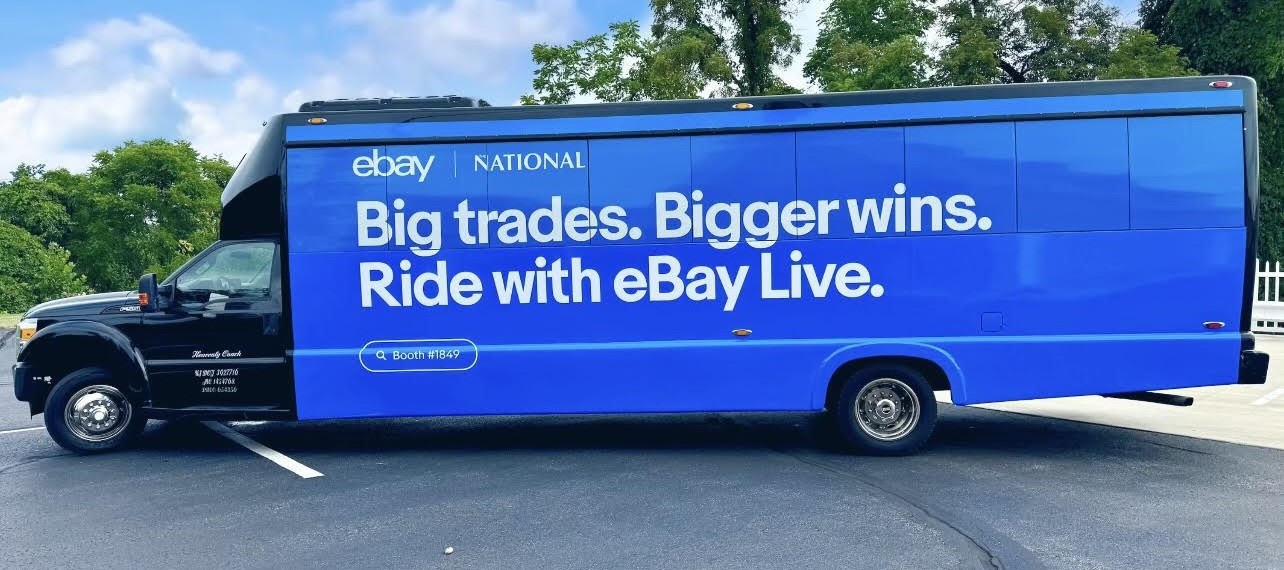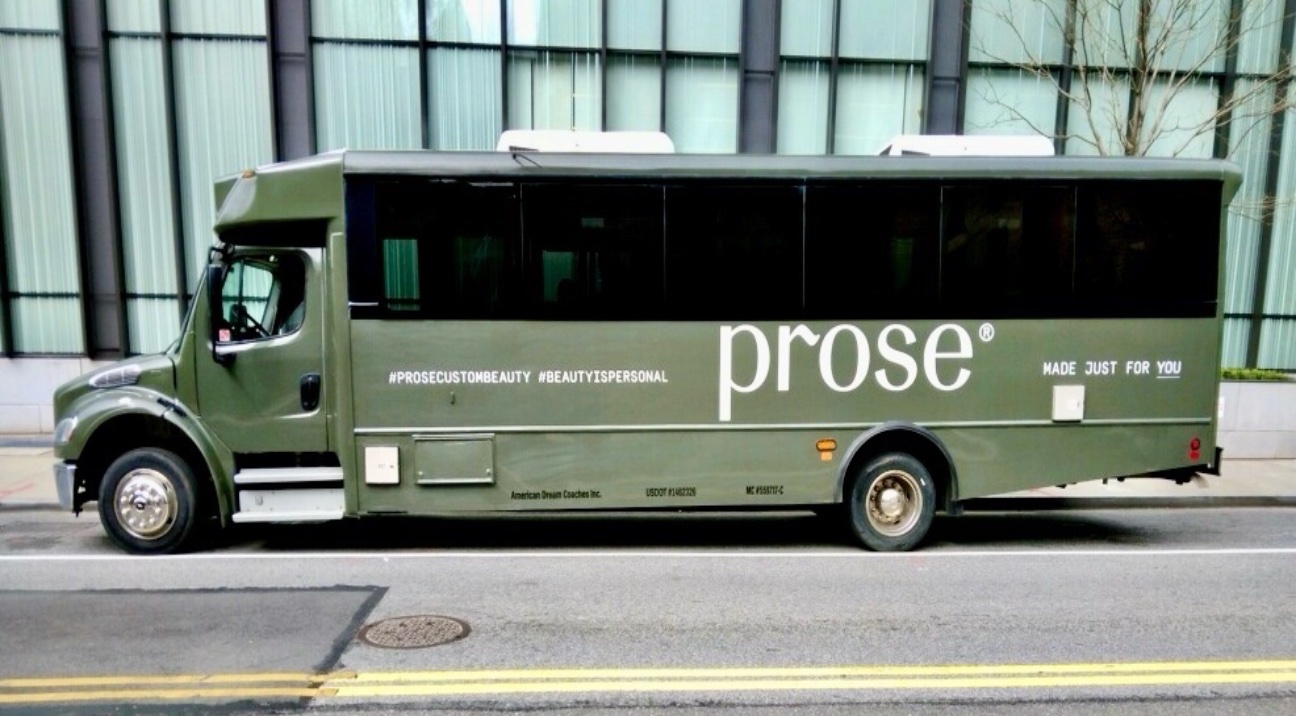

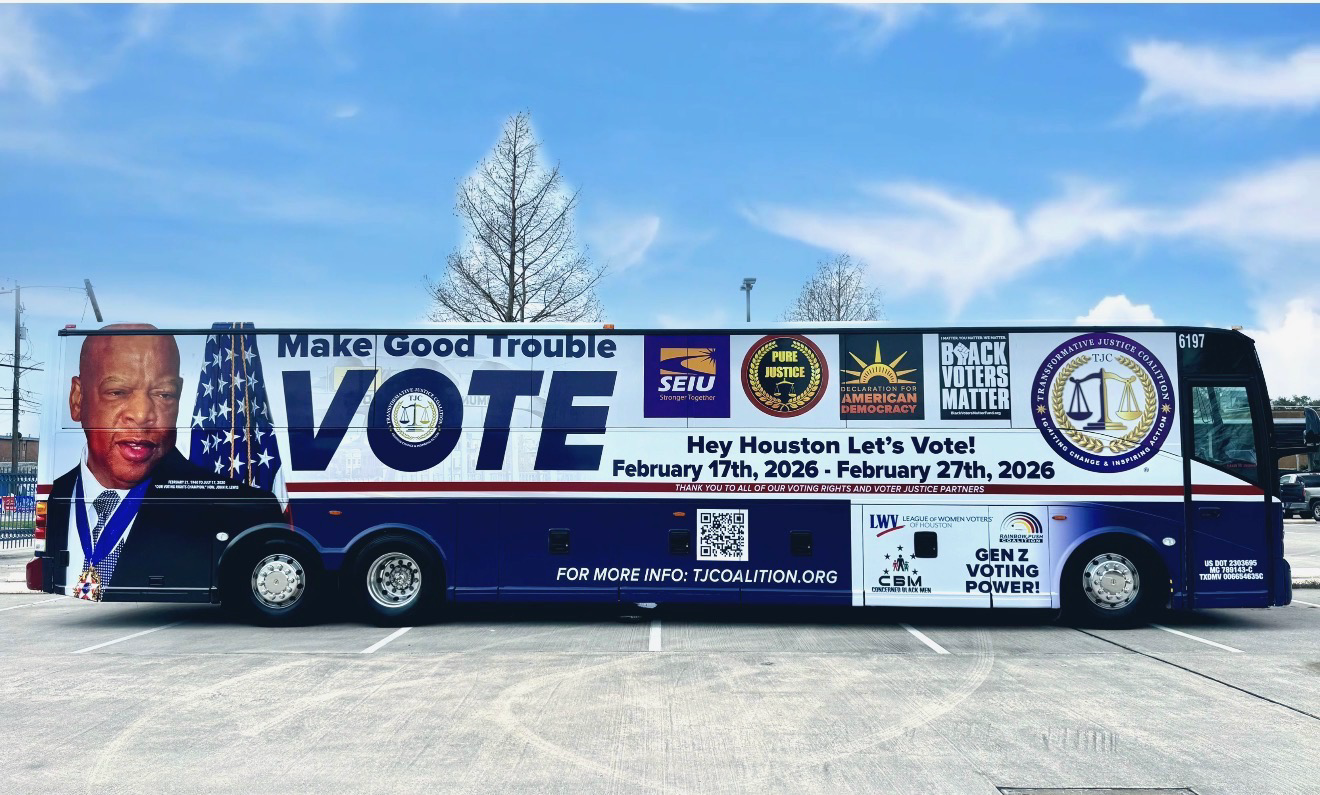
A campaign bus does something no other piece of campaign media can. It carries your candidate, your staff, and your press pool to voters, and it advertises to every person it passes on the way. One vehicle, working as transportation, as a mobile billboard generating an estimated 30,000 to 70,000 impressions per day, and as a backdrop for every photo taken at every stop.
That’s why the bus tour has survived every shift in campaign technology. Digital ads get skipped, mail gets tossed, and TV gets scrolled past, but a wrapped bus rolling into a county fairgrounds is a physical event that local press covers for free.
This guide covers how to run one properly: choosing the right vehicle, designing a wrap that reads from a hundred feet, meeting federal and state disclaimer requirements, planning routes and press logistics, and building a production timeline that doesn’t collide with your election date. Written for campaigns at every level, from municipal races to statewide and national operations.
Note: This guide is an educational overview of advertising and logistics practices, not legal advice. Campaign finance rules are complex and vary by jurisdiction, so consult your campaign’s compliance counsel before finalizing any design.
Why Campaign Buses Still Work:
The bus is the event
A campaign stop without a bus is a candidate standing in a parking lot. A campaign stop with a wrapped bus has a stage, a backdrop, and a visual anchor that tells everyone within sight that something is happening here. Local TV needs a shot, and the bus is the shot.
It advertises between stops, not just at them
Here’s the economics that campaign managers appreciate. The miles between events aren’t dead time. A wrapped bus traveling from one county to the next is running a continuous outdoor ad campaign along every highway, main street, and gas station in between, reaching voters who never attend a rally and may never see your digital ads.
Out-of-home advertising also drives measurable follow-up behavior: Nielsen research found 46% of U.S. adults searched for something after seeing an out-of-home ad, with out-of-home generating online search activity at nearly four times the rate its share of ad spend would predict. For a campaign, that means name recognition converting into voters looking you up.
It solves real logistics at the same time
Campaigns move people constantly: the candidate, senior staff, advance teams, traveling press, and volunteers. A dedicated bus keeps the operation together, protects the schedule, and gives your team a mobile office between stops. You’re paying for transportation regardless. Wrapping it means the transportation markets your campaign for the entire cycle.
Choosing the Right Vehicle for Your Campaign:
Vehicle choice comes down to how many people travel with the candidate and how far you’re covering.
Entertainer and star coaches
The flagship option for statewide and national campaigns. Built for long distances with sleeping quarters, lounge areas, and workspace, these coaches let a candidate travel overnight between media markets and arrive rested. They also provide the largest wrappable surface available, which is why they dominate the visual memory of presidential and gubernatorial tours.
Best for: multi-week tours, statewide races, national campaigns, anything with a traveling press pool.
Full-size coach buses
Maximum seating for staff, volunteers, and press, with enormous side panels for your wrap. The workhorse for day-trip tours and get-out-the-vote operations that move groups between events.
Best for: regional bus tours, GOTV canvassing operations, volunteer and supporter transport.
Mini buses and shuttles
More nimble than a coach and easier to maneuver through small-town main streets, neighborhood canvassing routes, and tight event parking. They also cost less to run, which matters for down-ballot budgets.
Best for: municipal and county races, urban canvassing, multi-stop days with tight turnarounds.
Sprinter vans
The candidate’s daily driver. Fast, flexible, easy to park, and able to reach places a coach can’t. Many campaigns run a sprinter for the candidate and a larger bus for staff and press.
Best for: local races, rapid-response scheduling, advance teams, candidate transport in dense areas.
Our guide to bus wrap cost by vehicle type breaks down what each vehicle offers as a canvas and how size shapes your investment.
Designing a Campaign Bus Wrap That Works:
Campaign wraps have a harder job than commercial ones. They must be readable at highway speed, photograph well from every angle, and comply with election law, all at once.
Start with the three-second rule
Voters see your bus for three to seven seconds. The hierarchy that works, in order:
- Candidate name, sized to dominate everything else
- Office sought, immediately below or beside it
- One message, a short slogan of about five words
- Required disclaimer, clearly legible (more on this below)
Everything beyond that competes with the name, and the name is the entire point. Down-ballot candidates especially should resist the urge to list positions. A bus is a name recognition tool, not a platform document.
Choose colors that survive distance and sunlight
High contrast wins. Dark text on light panels or light text on dark panels both work, while mid-tone on mid-tone disappears at 200 feet. Most campaigns use a limited palette of two or three colors, which also makes the wrap consistent with yard signs, mailers, and digital creative.
Design the rear panel for traffic
Drivers stuck behind your bus have the longest exposure of anyone. That panel deserves the cleanest treatment: name, office, and website. It’s also the best placement for a QR code, since the driver behind you is stopped and looking directly at it.
Make the candidate photo decision deliberately
Photos humanize, but they also consume the panel space your name needs, and a poorly reproduced portrait at bus scale can look worse than no portrait at all. If you use one, use a single high-resolution image with the candidate looking toward the text, not away from it. For down-ballot races where nobody knows the candidate’s face yet, name size almost always beats photo size.
Plan for photography
This bus will appear in local news, on social media, and in supporter photos for the entire cycle. Design the side panels so the composition still reads when someone stands in front of them, which usually means keeping the name high on the panel where people’s heads won’t block it.
Compliance: Disclaimers and Legal Requirements
This is where campaign wraps differ fundamentally from commercial ones, and where mistakes create real problems.
Federal disclaimer basics
Under federal rules, public communications by political committees must carry a clear and conspicuous “paid for by” disclaimer, and the FEC specifically lists billboards and signage among the communications that require one. A bus wrap is large-format signage by any reasonable reading, and it does not qualify for the small-items exception that covers things like buttons, pens, and bumper stickers.
The wording depends on who paid and who authorized:
- Paid for and authorized by the candidate’s committee: the disclaimer states that the committee paid for it, for example, “Paid for by the [Candidate] for [Office] Committee.”
- Paid for by another entity but authorized by the candidate: it must identify who paid and state that the candidate or committee authorized it.
- Paid for by an entity without candidate authorization, such as a PAC or outside group: it must give the payor’s full name plus a permanent street address, phone number, or website, and state that it was not authorized by any candidate or candidate’s committee.
Make the disclaimer genuinely legible
“Clear and conspicuous” is the legal standard, and a disclaimer printed at a size that vanishes at ten feet invites complaints. Build it into the design from the start rather than squeezing it in at the end. On a vehicle this large, there is no excuse for an unreadable disclaimer, and reviewers notice.
State and local rules add another layer
States impose their own disclaimer and advertising requirements on top of federal rules, and they vary significantly in wording, placement, and size expectations. Local jurisdictions may also regulate vehicle signage, parking of commercial or advertising vehicles, and where a bus may stage during events. Check every state your tour crosses, not just your home state.
Build compliance review into the timeline
The practical rule: your compliance counsel reviews the wrap design before it goes to print, not after. Reprinting a full coach wrap because of a disclaimer error is expensive, slow, and happens at the worst possible moment in a campaign calendar.
Again, this section is general educational information rather than legal advice. Verify all requirements with qualified campaign finance counsel for your jurisdiction and race.
Route and Tour Strategy
A campaign bus is media that moves, so route it like a media buy.
Map routes to your voter targets
Overlay your route on your voter file. The goal is maximizing exposure in persuasion and turnout territory, not simply reaching events efficiently. Sometimes the slower road through three small towns delivers far more value than the interstate that bypasses all of them.
Use drive time as earned media
Plan deliberate passes through downtown districts, past high-traffic intersections during rush hour, and along the main commercial strips of every town on the schedule. The bus should arrive early and loop before staging.
Park where people are
Where the bus sits between events matters as much as where it drives. Fairgrounds, farmers markets, stadium lots on game day, festival perimeters, and busy town squares all turn parked hours into impressions. A parked wrapped bus is a billboard in a location no billboard could occupy.
Coordinate with advance and press
Advance teams should confirm parking dimensions, turning clearance, and venue access rules before the bus arrives, since many small-town venues cannot accommodate a 45 foot coach. Position the bus for the camera angle at every stop: the shot of a candidate speaking with the bus behind them is one of the most reliable images in campaign photography.
Plan for the long haul
Multi-week tours need driver rotation, maintenance windows, overnight staging, and contingency plans for breakdowns. For statewide and national tours, many campaigns run a second vehicle as backup for exactly this reason.
Timeline: From Decision to Deployment:
Campaigns run on hard deadlines, so work backward from your launch date:
| Timeframe | What Happens |
|---|---|
| 8 to 10 weeks out | Decide vehicle type and tour scope; confirm budget and reserve vehicles |
| 6 to 8 weeks out | Design wrap creative; align with existing campaign visual identity |
| 5 to 7 weeks out | Compliance counsel reviews disclaimer language and placement |
| 4 to 6 weeks out | Approve final artwork; production and printing |
| 3 to 5 weeks out | Professional installation with photo verification |
| 2 to 3 weeks out | Route planning, advance coordination, driver briefing |
| Launch | Tour begins with the bus camera-ready from day one |
Wrap production itself typically needs 3 to 6 weeks from approved design to installed vehicle. The compliance review is what campaigns most often underestimate, so build that buffer in deliberately.
For what determines your investment, from vehicle size to coverage level, see our breakdown of how much a bus wrap costs and our guide to full wraps vs. partial wraps vs. decals.
Beyond the Candidate Tour:
Wrapped vehicles serve campaign organizations in several other ways.
GOTV and volunteer transport
Get-out-the-vote operations move volunteers to canvassing turf and voters to polling places. Branded vehicles make the operation visible and reinforce turnout messaging on every trip.
Ballot measure and issue campaigns
Issue campaigns often lack a candidate’s face to build recognition around, which makes a mobile visual anchor especially valuable for explaining a measure number and a position simply and repeatedly.
Party and committee operations
State parties and committees use wrapped vehicles across multiple races and cycles, spreading production cost over far more use than a single campaign.
Advocacy and awareness tours
Multi-city advocacy tours use wrapped coaches as traveling headquarters: part transportation, part press platform, part mobile visual identity.
Common Mistakes in Campaign Bus Wraps:
- Cramming the platform onto the panel. Voters read a name at 60 miles per hour, not a policy list. One message, maximum.
- Treating the disclaimer as an afterthought. It’s a legal requirement with a legibility standard, and it belongs in the first design draft.
- Starting production too late. Design, compliance review, printing, and installation take weeks, and campaign calendars don’t flex.
- Choosing a vehicle that can’t reach the schedule. A 45-foot coach cannot navigate every small-town square. Match the vehicle to the actual route.
- Ignoring the parked hours. The bus spends significant time stationary at venues. Plan those positions for visibility and for the camera.
- Inconsistent branding. The wrap should match the yard signs, mailers, and digital creative exactly. Recognition compounds only when everything looks like the same campaign.
FAQ: Political Campaign Bus Wraps and Transportation
How much does a campaign bus wrap cost?
It depends on the vehicle, coverage level, and campaign length, which is why we publish transparent starting estimates rather than vague ranges. See our bus wrap cost by vehicle type guide, then contact us for a quote built around your tour.
Do campaign buses legally need a disclaimer?
Federal rules require clear and conspicuous “paid for by” disclaimers on public communications from political committees, and the FEC lists billboards and signage among the communications covered. The small-items exception applies to things like buttons and bumper stickers, not to a wrapped vehicle. State rules add requirements on top. Always confirm exact language with your compliance counsel before printing.
How far in advance should a campaign book a wrapped bus?
Plan 8 to 10 weeks before your tour launch. Wrap production needs roughly 3 to 6 weeks from approved art, and compliance review should happen before printing rather than after. Tight timelines are possible, but buffers protect you from costly reprints.
Can we rent the bus and the wrap from one provider?
Yes, and it’s the simpler path. We supply the vehicles, from sprinter vans to full size entertainer coaches, wrap them in your campaign creative, and handle logistics end to end. One partner means one point of contact instead of coordinating a charter company and a print shop separately.
What happens to the wrap after the election?
Professional installation means clean removal, and the vinyl protects the paint underneath while it’s on. Campaigns that plan for a runoff or a second cycle sometimes keep the wrap in place, since a single production run can serve a longer window.
Which vehicle size is right for a local race?
Most municipal and county campaigns are best served by a minibus or Sprinter. They’re easier to park downtown, cheaper to operate, and still deliver a full-size visual presence at events. Coaches make more sense once you’re covering a state or traveling with press.
Conclusion:
A wrapped campaign bus does three jobs at once: it moves your operation, it advertises to every voter it passes, and it gives every stop a backdrop that local media will photograph. The campaigns that get the most from it keep the design simple with the candidate name dominant, treat the disclaimer as a design element rather than a footnote, route the bus through voter territory instead of just toward events, and start production early enough that compliance review never becomes a crisis.
Do that, and the vehicle you were going to pay for anyway becomes one of the most efficient pieces of media on your entire campaign budget.
Put Your Campaign on the Road:
We provide the fleet and the wraps together, from sprinter vans for local races to full-size entertainer coaches for statewide and national tours, and we handle design, printing, installation, routing, and logistics end to end. We work with campaigns, committees, and advocacy organizations across the political spectrum, and we understand that campaign calendars don’t move. See real campaigns in our case studies, then get a free quote or call 888-646-6660. Tell us your race, your route, and your launch date, and we’ll build the plan around them.
Sources: Disclaimer requirements summarized from Federal Election Commission guidance on advertising and disclaimers and Congressional Research Service summaries of FECA disclosure requirements; search activation data from Nielsen’s OOH Online Activation Survey; impression figures are industry estimates and vary by route and market. This article is educational information, not legal advice.