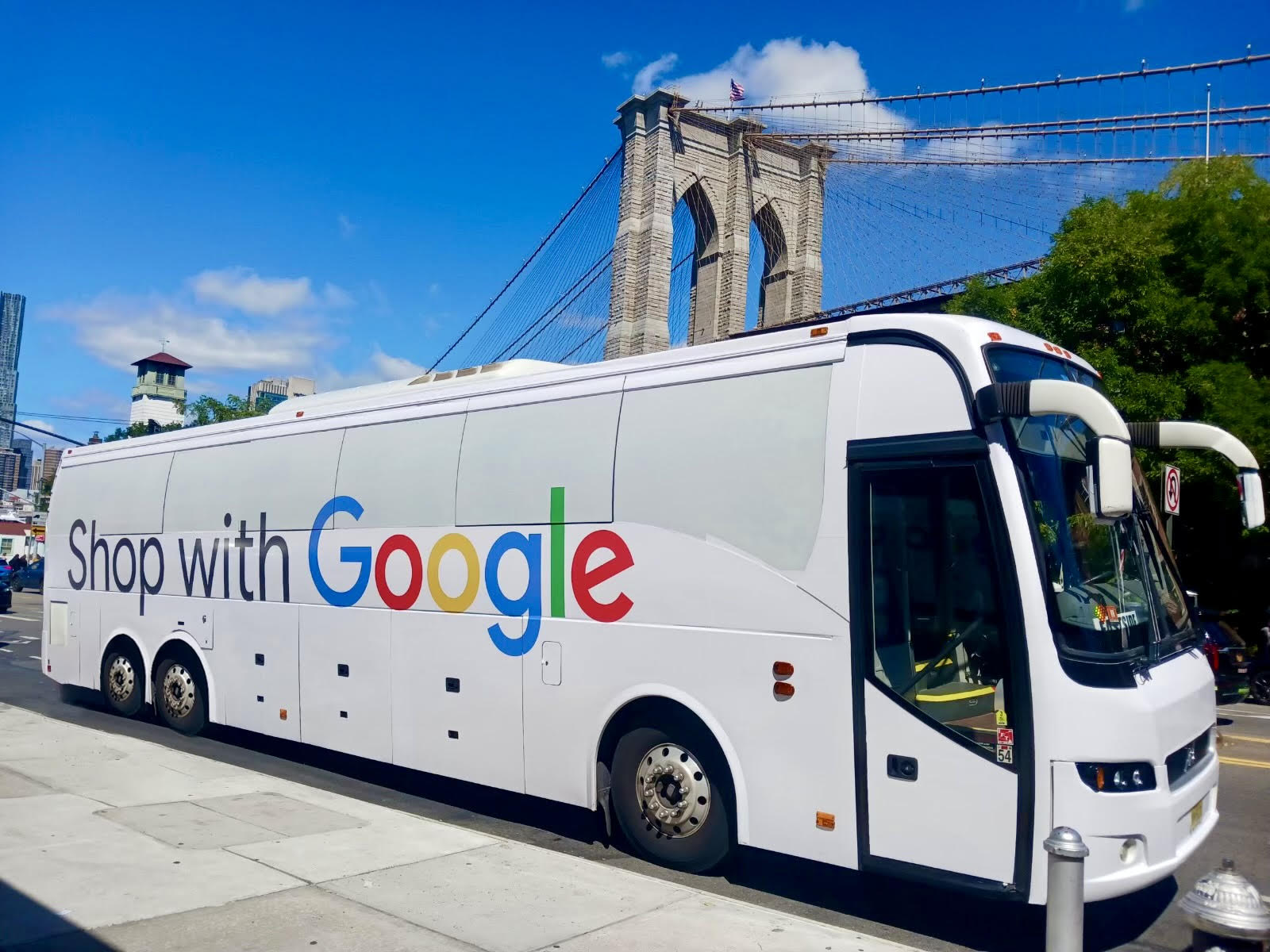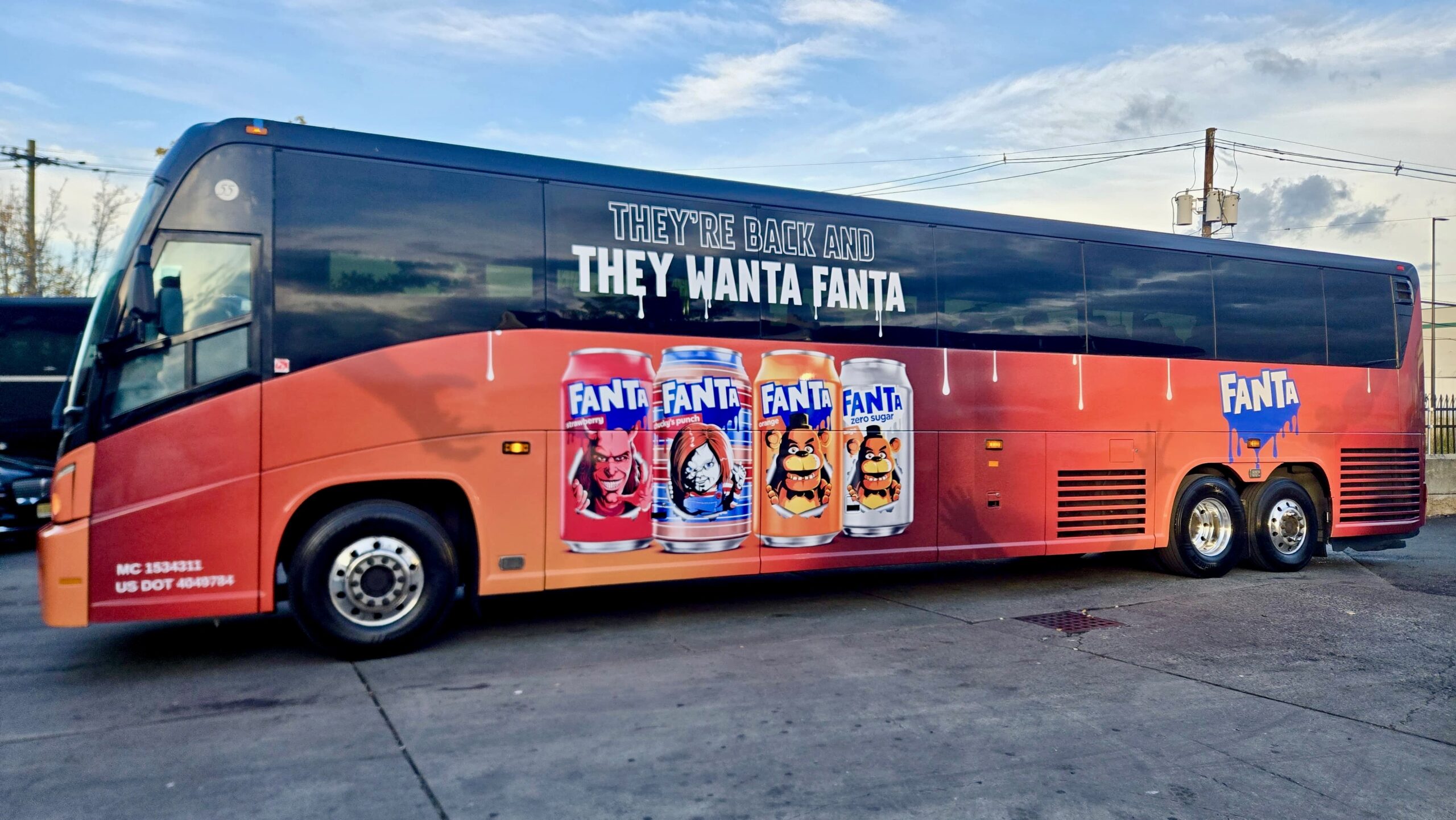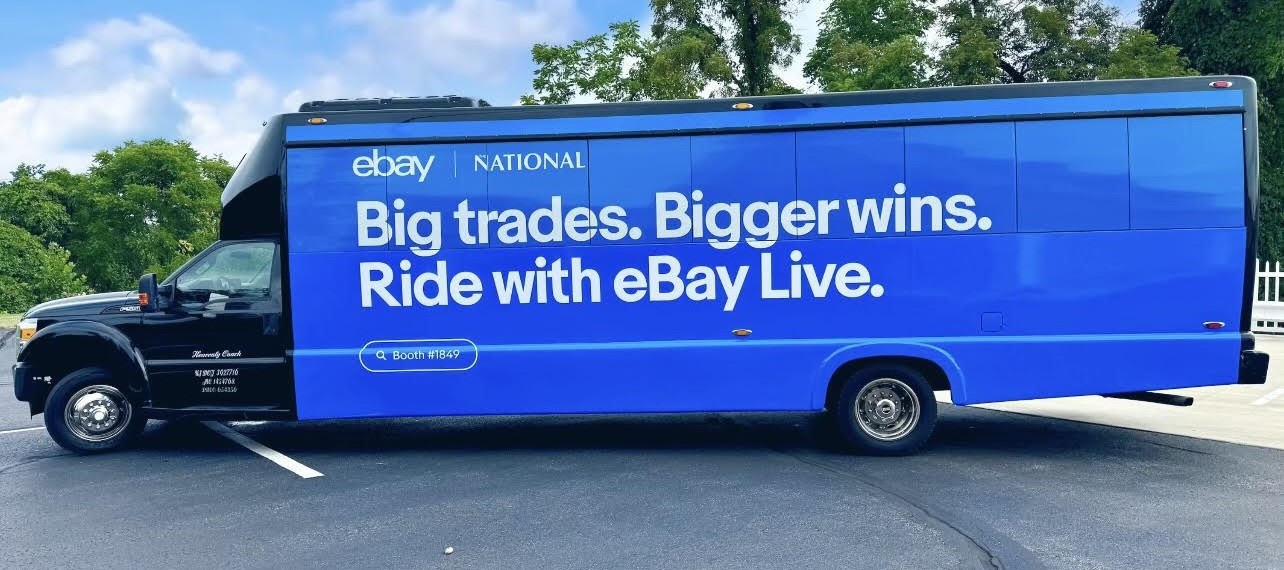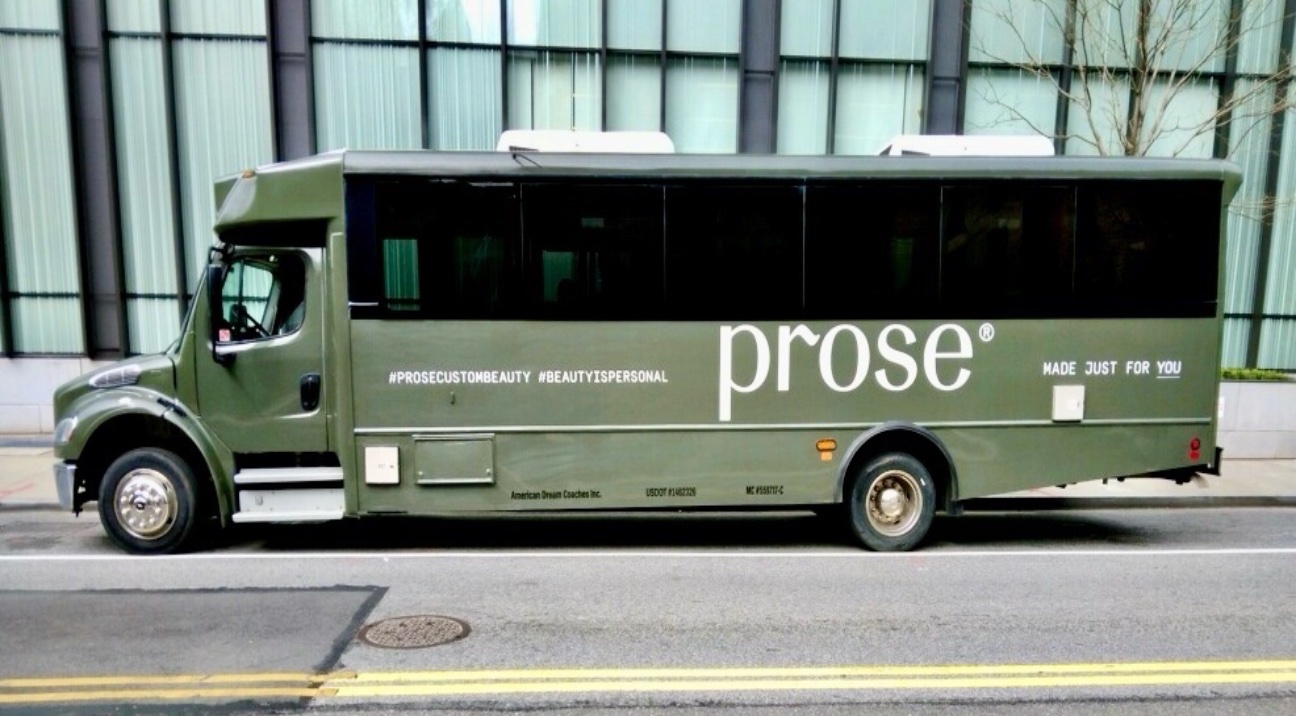


Bus wraps usually give you more impressions per dollar, while billboards give you more impressions in one exact spot. A wrapped bus in a mid-to-large city generates roughly 30,000 to 70,000 impressions a day at a cost per thousand impressions (CPM) of about $0.50 to $3. A standard billboard averages around $2,500 per month with a CPM in the $5 to $10 range. So on pure efficiency, the bus wins. But efficiency isn’t the whole story, and picking the wrong format for your business can waste every dollar you spend, no matter how cheap the impressions were.
I’ve broken down the real costs, the audience data, and the situations where each format actually makes sense. By the end, you’ll know exactly which one fits your budget, or whether you should split it between both.
What Is Bus Wrap Advertising?
Bus wrap advertising is exactly what it sounds like. Your ad gets printed on vinyl and applied to a city bus. The bus becomes a moving billboard that follows the same routes through the same neighborhoods every single day.
You’ve got a few format options, and the price gap between them is huge:
- Full wrap: covers the entire bus, including windows (with perforated see-through vinyl). Maximum impact, maximum cost.
- Partial wrap: covers the back and part of the sides. Most of the visual punch at a fraction of the price.
- King and queen panels: large flat panels on the sides of the bus. The workhorse of transit advertising.
- Tail panels: the back of the bus. Cheap, and it stares directly at drivers stuck behind it in traffic.
One thing people miss: you’re not buying the bus, you’re renting the space. The transit authority or media company owns the inventory, and your contract typically runs in four-week cycles, just like billboards.
What Is Billboard Advertising?
A billboard is fixed outdoor ad space, usually along a highway, major road, or busy intersection. Two main types matter for your budget:
- Static billboards: printed vinyl, one advertiser, up 24/7. You own that space completely for your contract period.
- Digital billboards: LED screens that rotate between multiple advertisers. You get a slice of screen time (often 8 seconds out of every 64), but you can change your creative instantly and even run different messages by time of day.
The classic 14 x 48 foot “bulletin” you see on highways is the biggest and most expensive format. Smaller posters (roughly 10 x 22 feet) sit on surface streets and cost a lot less.
Bus Wrap vs. Billboard: Side by Side Comparison
| Factor | Bus Wrap | Billboard |
|---|---|---|
| Typical monthly cost (mid-size market) | $1,500 to $6,000 (partial/panels) | $750 to $3,500 (static) |
| Typical monthly cost (major metro) | $8,000 to $15,000+ (full wrap) | $3,000 to $14,000+ |
| Production cost | $500 to $3,000 per bus | $500 to $1,500 (print + install) |
| Estimated CPM | About $0.50 to $3 | About $5 to $10 |
| Daily impressions | 30,000 to 70,000 per bus | Varies by location; a busy board might do 13,000 to 30,000+ |
| Coverage | Entire route network across multiple neighborhoods | One fixed location |
| Audience | Pedestrians, drivers, and riders at street level | Mostly drivers at highway speed |
| Message length | Short, because the bus is moving | Short, because you’re moving |
| Best contract length | 3+ months (production costs need time to pay off) | 1 to 3 months minimum, flexible |
| Flexibility | Low, since reprinting a wrap is expensive | Static: low. Digital: very high |
Cost figures are 2026 U.S. market ranges compiled from industry rate data. Your actual quote will depend on market, route or location quality, and contract length.
How Much Does Bus Wrap Advertising Cost?
Let’s talk real numbers, because “it depends” is a useless answer.
Space rental (the recurring cost):
- Full bus wrap in a top 10 market (New York, LA, Chicago): $8,000 to $15,000+ per month
- Full wrap in a mid-size market: often $3,000 to $7,000 per month
- King panels: $800 to $3,500 per month
- Partial wraps and side panels: $500 to $3,000 per month
- Interior cards: as little as $40 to $400 per month
Production (the one-time cost): design, printing, and installation typically add $500 to $3,000 per bus. This is the number that trips up first-time buyers. If you sign a one-month contract, that production cost gets squeezed into 30 days and murders your CPM. Sign for six months, and suddenly it’s a rounding error.
That’s the single most important budgeting rule for bus wraps: the longer you run, the cheaper every impression gets. Production is fixed. Exposure is not.
What You Get for That Money
A single bus in a top 25 U.S. market generates an estimated 30,000 to 70,000 impressions per day. Do the math on a $4,000 per month king panel pulling 40,000 daily impressions. That’s roughly 1.2 million impressions a month for a CPM around $3.30, and full wraps on high-traffic routes can push well below that. Industry data from the Out of Home Advertising Association (OAAA) has pegged vehicle wrap CPMs under $1 in favorable conditions, which makes wrapped vehicles one of the cheapest impression sources in all of advertising.
For comparison, Facebook display CPMs commonly run $7 to $15 in competitive markets. Radio pushes $12 to $16.
How Much Does Billboard Advertising Cost?
Billboards price like real estate, because that’s essentially what they are.
Space rental:
- U.S. national average: roughly $2,500 to $3,900 per four-week cycle
- Rural or small market static boards: $250 to $1,500 per month
- Mid-size city boards: $1,500 to $4,000 per month
- Major metro placements: $3,000 to $14,000+, with premium units (think Times Square) reaching $50,000 to $100,000 and up
- Digital billboards: typically 30% to 50% more than a comparable static board, ranging from $1,200 to $15,000+ per month
Production: printing vinyl for a static board runs about $1.50 to $3.00 per square foot, which comes out around $500 for a standard bulletin, plus $200 to $1,000 for installation. Digital boards skip production entirely, which is a genuine advantage if you plan to change your creative often.
What You Get for That Money
Billboard CPMs generally land between $5 and $10 for standard placements, with the industry average often cited around $5.21. Marquee locations run $15 to $25. That’s still cheaper than most digital and broadcast channels, and unlike a web banner, a billboard can’t be blocked, skipped, or scrolled past.
The billboard’s superpower is owning a location. If there’s one intersection every one of your customers drives through, maybe the exit before your store, the road to the stadium, or the route to the airport, a billboard plants your brand there permanently. A bus can’t do that. It shows up, then it leaves.
Which One Reaches More People?
Depends what you mean by “reach.”
Bus wraps win on breadth and frequency. A bus covers 20, 30, sometimes 50+ miles of routes daily, passing through residential streets, shopping districts, and downtown cores where billboards often aren’t even permitted. Industry studies show transit advertising reaches around 92% of adults in urban areas within a week. And because buses run fixed routes, the same commuters see your ad again and again. Nielsen research found that 71% of riders look at transit ads frequently or almost always, and 78% of U.S. travelers noticed transit advertising in the past month.
Billboards win on guaranteed placement and dwell time. Every impression happens exactly where you chose. If that spot sits on a congested commute corridor, drivers may stare at your message for a full red light cycle, far longer than the 3 to 5 seconds a passing bus gets. Traffic data also makes billboard impressions easier to verify. Providers publish daily effective circulation (DEC) counts you can audit before you sign.
Here’s the honest framing: bus wraps spread your message across a city, while billboards drill it into one spot. Neither is “more reach.” They’re different shapes of reach.
Bus Wrap vs. Billboard: Which Is Better for Your Business?
Skip the theory. Here’s who should buy what.
Choose a Bus Wrap If…
- You’re a local service business (dentist, HVAC, law firm, restaurant chain) whose customers live along specific routes. The bus drives through their neighborhood twice a day.
- You need street-level visibility. Buses reach pedestrians, cyclists, and downtown foot traffic that highway billboards never touch.
- Your city restricts billboards. Plenty of dense urban cores have few or no billboard permits. Transit is often the only large format game in town.
- You can commit to 3 to 6 months. That’s how long it takes for the production cost to stop hurting and the frequency effect to kick in.
- You want the lowest possible cost per impression, and you’re building brand awareness rather than pushing a this weekend only offer.
Choose a Billboard If…
- Location is your strategy. “Exit 12, turn right” works on a billboard. It’s meaningless on a moving bus.
- You’re targeting highway commuters or travelers. Hotels, gas stations, attractions, and anything near an interstate lives on billboards.
- You need creative flexibility. Digital billboards let you swap messages the same day, run countdowns, or change by daypart. A vinyl bus wrap is locked in until you pay to replace it.
- You want short, testable campaigns. A one-month billboard flight has no sunk production cost dragging it down, especially digital.
- You’re a regional or national brand buying presence in specific high-value corridors.
The Hybrid Play (What Bigger Budgets Actually Do)
If you’ve got $8,000 to $10,000 a month, the strongest move is often both. One well-placed billboard as your fixed anchor, plus bus panels circulating the surrounding neighborhoods. The billboard builds authority (“they’re a real brand”) and the buses build frequency (“I see them everywhere”). Outdoor advertising research consistently shows mixed format campaigns beat single format spends on recall, and this combo is exactly why.
5 Mistakes That Waste Your Budget (Either Format)
- Comparing monthly price instead of CPM. A $2,000 board with 100,000 impressions is worse value than a $4,000 bus wrap with 1.2 million. Always ask for projected impressions and divide.
- Cramming too many words in. Both formats give viewers 3 to 7 seconds. Six words, a logo, and one action. That’s it.
- Buying bus wraps for one month. You’ll pay full production for a fraction of the exposure. Either commit or pick a different channel.
- Ignoring route and location reports. Reputable vendors provide route maps or DEC traffic counts. If they won’t, walk away.
- Having no way to measure. Add a dedicated phone number, a short URL, a QR code, or a “mention the bus” offer. Otherwise you’ll never know what worked.
FAQ: Bus Wraps vs. Billboards
Is a bus wrap cheaper than a billboard?
Per impression, usually yes. Bus wraps often run $0.50 to $3 CPM versus $5 to $10 for billboards. Per month, a billboard in a small market can be cheaper in absolute dollars. If your total budget is under $1,500 per month, a small market billboard or a bus king panel is more realistic than a full wrap.
How long does a bus wrap last?
The vinyl itself lasts 3 to 5 years, but your ad contract is what matters. Most run in four-week cycles, with meaningful discounts at 3, 6, and 12 months.
Do bus ads actually work for small businesses?
Yes, when the routes match your service area. A plumber advertising on routes through the neighborhoods they serve gets repeated exposure to exactly the right households. A bus that mostly runs through areas you don’t serve is wasted money, so always review the route map first.
Static or digital billboard: which is better on a budget?
Static, if you’ll run one message for 2+ months (no rotation sharing, no premium pricing). Digital, if you want to test creative, run short flights, or skip production costs entirely.
What’s a realistic minimum budget for each?
Bus advertising: around $500 to $1,000 per month gets you panels in many mid-size markets, plus production. Billboards: from about $250 to $500 per month in rural areas and $1,500+ in most cities. Full bus wraps and metro billboards both start around $3,000+ monthly.
Conclusion
If your customers are spread across a city and you’re playing the long game on brand awareness, the bus wrap stretches your budget further. The CPM math isn’t close. If your business depends on one location, one corridor, or one highway exit, the billboard’s fixed presence beats the bus’s efficiency, because the cheapest impression in the world is worthless if it happens in the wrong neighborhood.
And if you can afford it? Anchor with a billboard and circulate with buses. Ask every vendor for route maps or traffic counts, calculate the CPM yourself, and commit long enough for repetition to do its job. That’s the whole game.
Ready to Put Your Brand on the Move?
If bus advertising sounds like the right fit, that’s exactly what we do at Buswrap.com. We handle everything from route planning and design to printing and installation, so you get a wrap that actually turns heads instead of blending into traffic. Reach out for a free quote, and we’ll show you the routes, the numbers, and what your budget can realistically deliver before you spend a dollar.