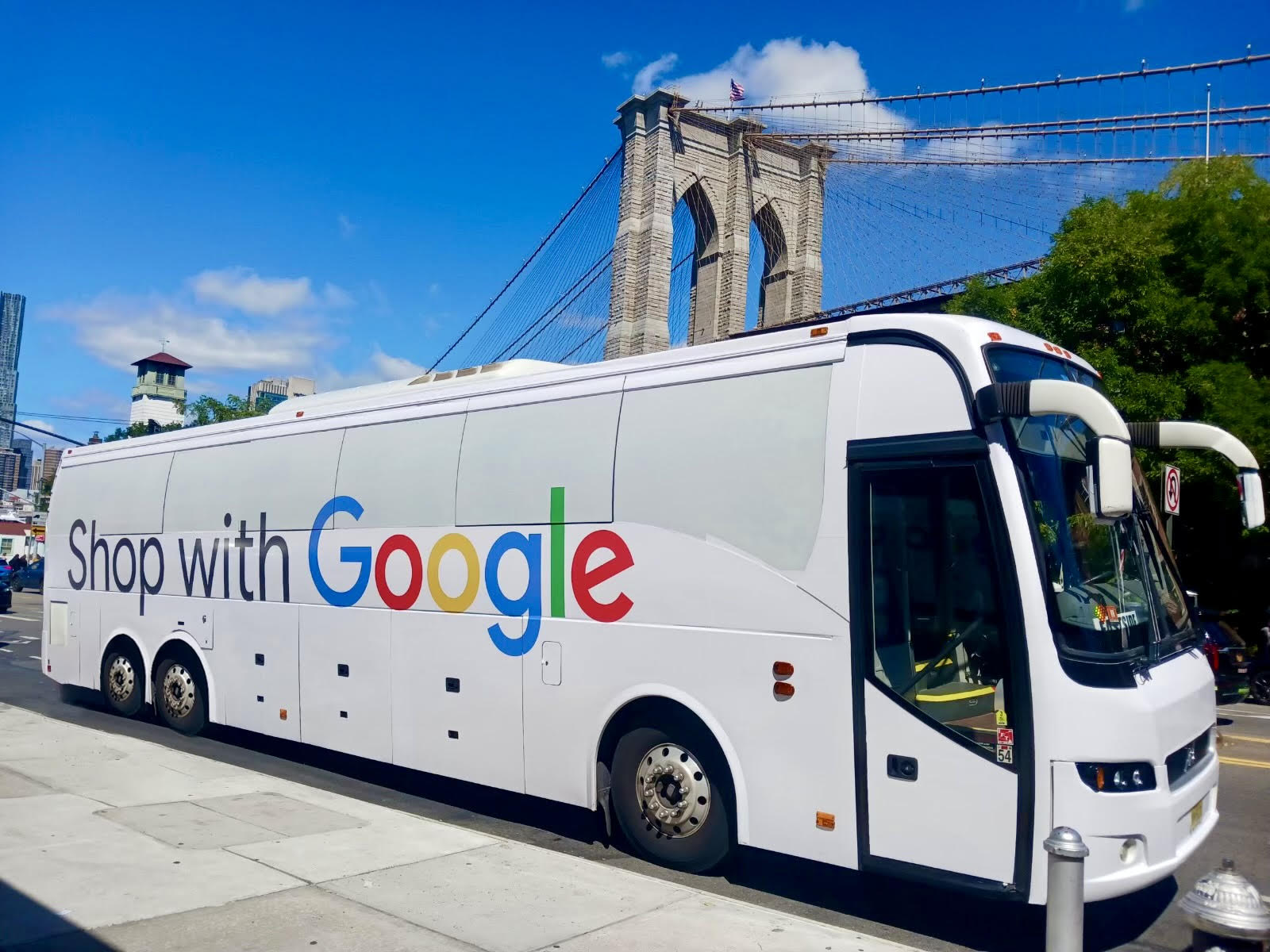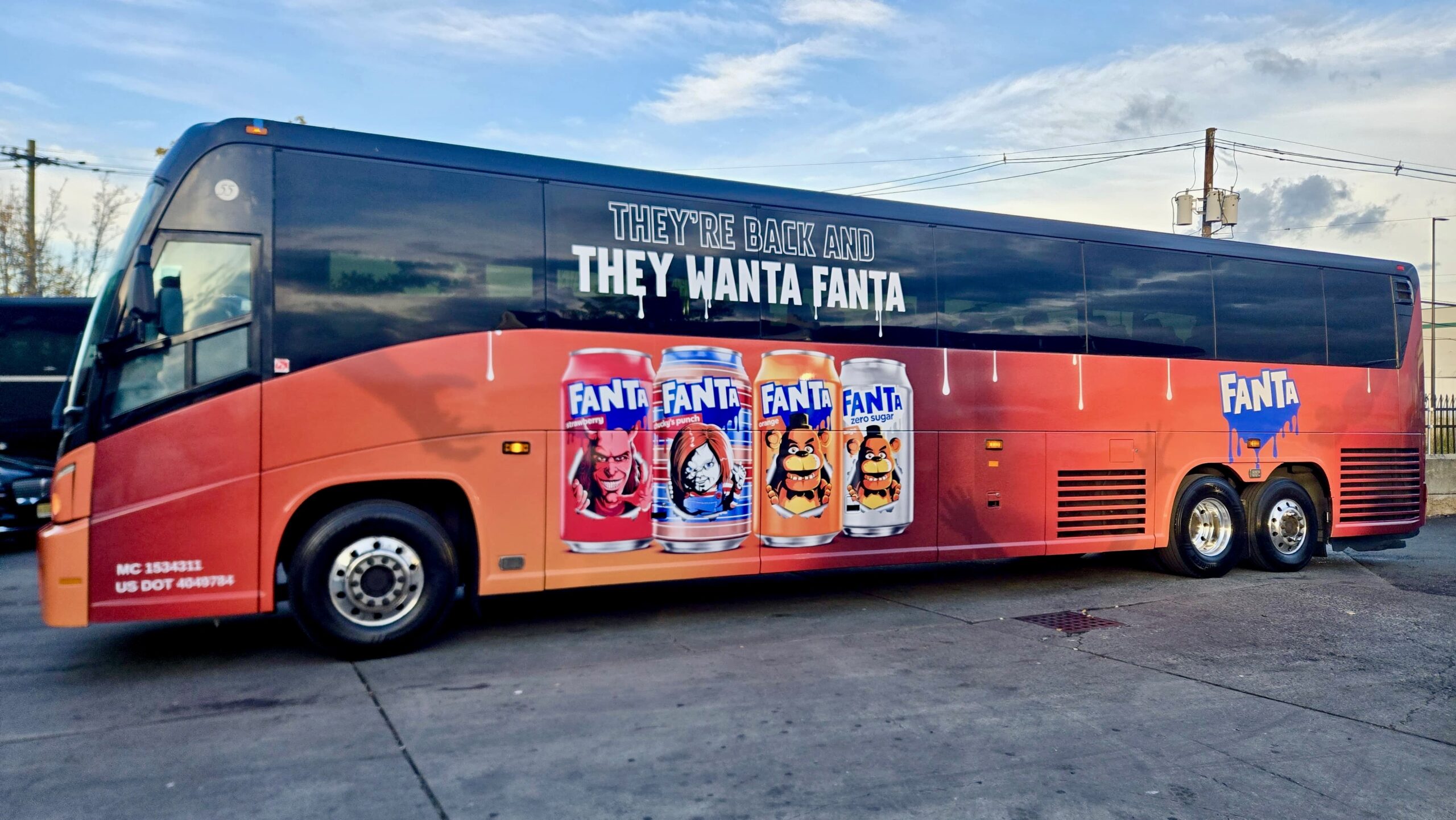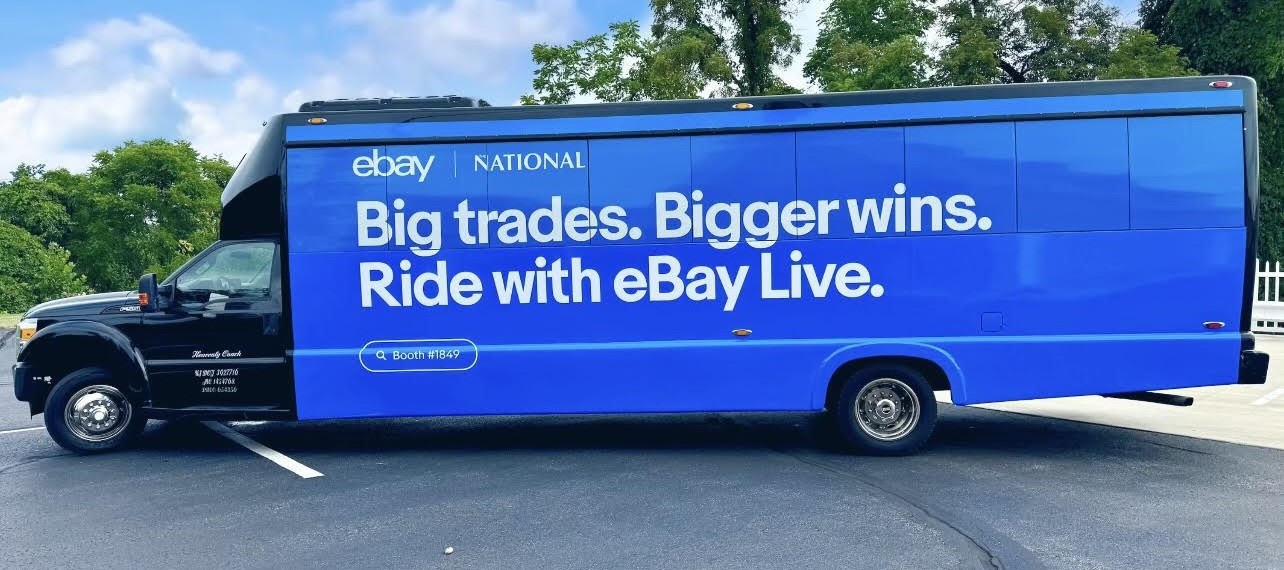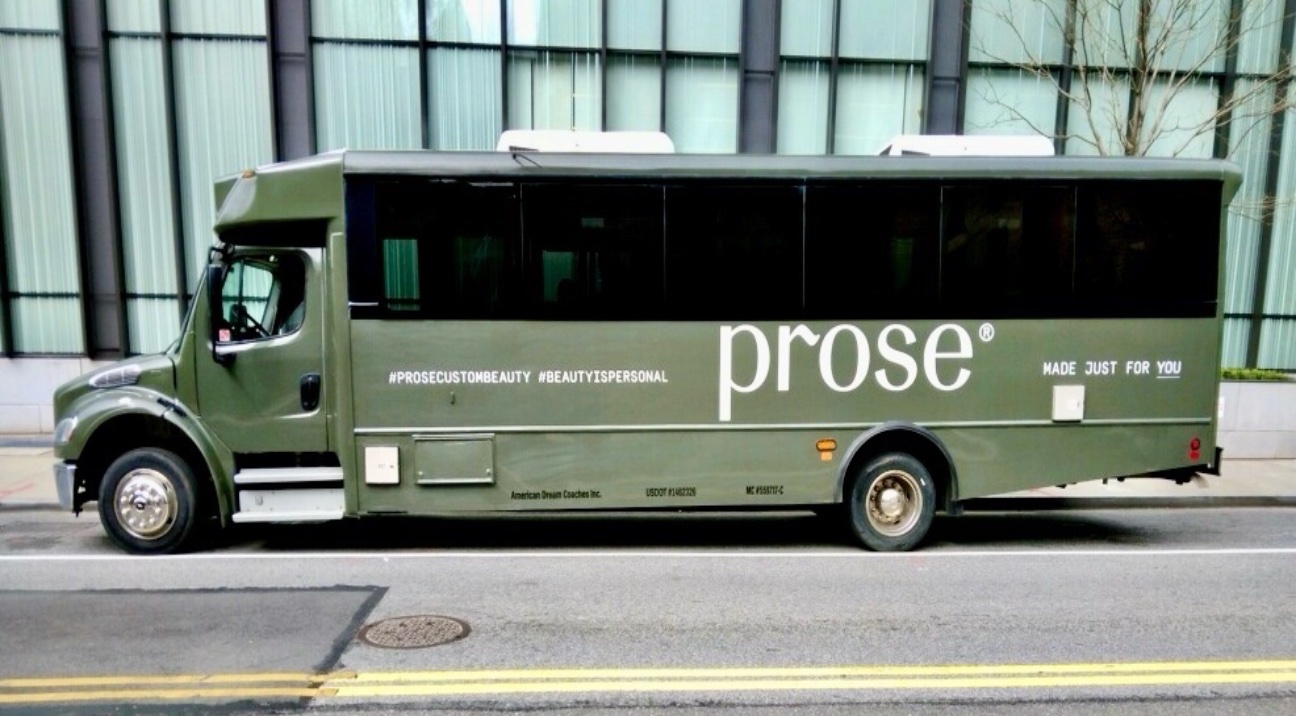


A full bus wrap gives you maximum impact and costs the most; a partial wrap delivers most of that visual punch at roughly half the price, and decals are the budget option that works best for simple branding like logos and contact info. For most businesses, the sweet spot is a well-designed partial wrap. It covers the high-visibility areas people actually look at, without paying to wrap surfaces nobody sees.
But “most businesses” isn’t your business. The right coverage level depends on your budget, how long you’ll run the campaign, and whether you’re building a brand or just labeling a vehicle. Let’s break down all three options with real numbers so you can decide in the next ten minutes instead of the next ten phone calls.
The Three Coverage Levels, Explained
Before comparing prices, let’s get the definitions straight, because vendors use these terms loosely and it causes expensive confusion.
What Is a Full Wrap?
A full wrap covers the entire vehicle from front to back, typically 90 to 100% of the paintable surface. On a bus, that includes the sides, rear, front, and even the windows, using perforated see-through vinyl that lets passengers look out while your design stays seamless from the outside.
A full wrap doesn’t just carry your ad. It becomes the vehicle. There’s no visible bus underneath, just one giant rolling canvas. That’s why full wraps dominate brand launches, citywide campaigns, and any situation where you want people to stop and stare.
What Is a Partial Wrap?
A partial wrap covers a chosen section of the vehicle, usually somewhere between 30 and 70% of the surface. Common setups include:
- Sides plus rear: the classic layout, since those are the angles drivers and pedestrians see most
- Rear plus lower panels: budget-friendly and still very visible in traffic
- King or queen panels on a bus: large flat side panels that function like a billboard mounted on the vehicle
Smart partial wraps are designed to blend into the vehicle’s existing paint color, so the wrap looks intentional rather than cut off. Done well, most people can’t tell it isn’t a full wrap.
What Are Decals?
Decals (also called spot graphics or cut vinyl) are individual graphics applied to specific spots, covering under 20% of the vehicle. Think logo on the door, phone number on the tailgate, website across the rear window. They’re printed or cut from vinyl and applied piece by piece.
Decals don’t transform a vehicle. They label it. That’s not an insult, by the way. For a lot of service businesses, labeling is exactly what’s needed.
Full Wrap vs. Partial Wrap vs. Decals: Comparison Table
| Factor | Full Wrap | Partial Wrap | Decals |
|---|---|---|---|
| Coverage | 90 to 100% | 30 to 70% | Under 20% |
| Production cost (standard commercial vehicle) | $3,000 to $7,000+ | $1,500 to $3,800 | $100 to $1,700 |
| Production cost (full-size bus) | Often $6,000 to $12,000+ | $2,000 to $6,000 | $300 to $1,500 |
| Visual impact | Maximum, impossible to miss | Strong, 70 to 80% of full wrap effect | Modest, functional |
| Design freedom | Total, edge to edge | High within covered zones | Limited to placed graphics |
| Install time | 2 to 5 days | 1 to 2 days | Hours |
| Lifespan | 3 to 5 years | 3 to 5 years | 2 to 5 years |
| Paint protection | Entire surface | Covered areas only | Minimal |
| Best for | Brand campaigns, transit advertising, launches | Most small businesses and fleets | Contact info, compliance, tight budgets |
Ranges compiled from 2025 to 2026 industry pricing data. Bus and large vehicle costs sit at the top of each range because of sheer surface area.
What Does Each Option Actually Cost?
Coverage is the single biggest lever on price. Wrap material runs roughly $8 to $12 per square foot with another $2 to $3 per square foot for professional installation, so every extra panel you cover adds up fast. Here’s how that plays out.
Full Wrap Costs
For standard commercial vehicles like cargo vans, full wraps typically run $3,000 to $7,000. Scale up to a transit bus, and you’re often looking at $6,000 to $12,000 or more in production, simply because a 40-foot bus has an enormous amount of surface to print, laminate, and install.
If you’re advertising on a transit bus you don’t own, remember the space rental on top of production: full wraps rent for $3,000 to $7,000 per month in mid-size markets and $8,000 to $15,000+ in major metros.
One more line item people forget: removal. A professionally installed wrap comes off clean, but budget a few hundred dollars for it at the end of the campaign.
Partial Wrap Costs
Partial wraps typically run $1,500 to $3,800 on standard commercial vehicles, and roughly $2,000 to $6,000 on buses depending on how much you cover. Here’s the part that makes partial wraps the value pick: a well-designed partial wrap covering the doors, side panels, and rear can deliver nearly the same impressions per mile as a full wrap, because those are the surfaces people actually see in traffic. You’re often getting 70 to 80% of the impact for 40 to 60% of the cost.
Decal Costs
Decals span a huge range because the scope varies so much:
- Simple door logos or lettering: $50 to $250 per placement
- Larger spot graphics (rear graphics, side visuals): $300 to $1,200
- A complete cut decal package for a commercial vehicle: $1,100 to $1,700
For a startup that just needs a name, number, and website on the truck, decals get the job done for less than a month of most other advertising.
Which One Gets Noticed More?
Let’s be real about what each level buys you in attention.
Vehicle graphics as a category are shockingly effective. Studies have found that around 92% of people notice wrapped vehicles, and a single commercial vehicle can generate 30,000 to 70,000 impressions per day depending on the market and mileage. The question is how much of that attention each coverage level captures.
Full wraps own the street. Edge-to-edge color is impossible to process as “just another vehicle.” Your brain flags it instantly, which is why full wraps consistently deliver the strongest recall. If your goal is for people to remember your brand next month, this is the format.
Partial wraps punch above their price. Because the human eye focuses on the sides and rear of vehicles in traffic, a partial wrap concentrated there captures most of the same glances. The falloff versus a full wrap is real but smaller than the price gap.
Decals inform rather than attract. Nobody’s stopping to admire a door logo. But when someone is already looking, maybe you’re parked at a job site or stopped at a light, decals answer the two questions that matter: who are you and how do I reach you? For plumbers, electricians, and contractors, that’s often the entire job.
How to Choose: A Simple Decision Framework
Skip the agonizing. Answer these four questions.
1. What’s the job of the vehicle graphic?
- Build a brand people remember: full wrap
- Advertise services while you drive your service area: partial wrap
- Identify the vehicle and share contact info: decals
2. What’s your realistic budget per vehicle?
- Under $1,500: decals, no question. A cheap partial wrap done badly looks worse than clean decals done well.
- $1,500 to $4,000: partial wrap territory, and it’s the best value zone in vehicle advertising.
- $4,000 and up: full wrap becomes realistic, especially if the vehicle runs high mileage in busy areas.
3. How long will this stay on?
Wraps are a fixed cost spread over time. A $6,000 full wrap that stays on for 4 years costs you about $125 a month, which is absurd value for a rolling billboard. The same wrap removed after 6 months costs $1,000 a month. The longer your graphics stay on, the more the math favors bigger coverage.
4. How many vehicles are you branding?
Fleets change the calculation. Ten vans with sharp partial wraps usually beat three vans with full wraps, because frequency across a city builds recognition faster than intensity on fewer vehicles. Many fleets also mix levels: full wraps on the flagship vehicles, partials on the rest, decals on support vehicles.
The Mistakes That Waste Wrap Budgets
- Buying coverage instead of design. A cluttered full wrap loses to a clean partial every time. Six words, a bold logo, one contact method. Whatever the coverage level, simplicity wins the three-second glance.
- Wrapping surfaces nobody sees. Roofs, lower rocker panels, and front bumpers add cost and rarely add impressions unless your audience looks down from office towers.
- Cheap vinyl on a long campaign. Economy film fades and peels in a year or two. If the graphics need to last 3+ years, premium cast vinyl from brands like 3M or Avery Dennison pays for itself.
- Skipping the installer’s track record. A bubbling, lifting wrap advertises exactly one thing: carelessness. Ask to see vehicles they wrapped a year ago, not last week.
- Ignoring vehicle condition. Vinyl sticks to paint. If the paint is peeling or rusted, the wrap fails early, and installers charge more for prep work on rough surfaces.
FAQ: Choosing Your Wrap Coverage
Is a partial wrap worth it compared to a full wrap?
For most small businesses, yes. A partial wrap focused on the sides and rear captures the majority of real-world views at roughly half the cost. Full wraps make sense when brand impact is the whole point, like transit advertising campaigns or product launches.
How long do wraps and decals last?
Quality vinyl wraps last 3 to 5 years with basic care. Decals last 2 to 5 years depending on material grade and sun exposure. Hand washing extends the life of both. Harsh pressure washing shortens it.
Do wraps damage the paint?
No, the opposite. Vinyl actually protects the paint underneath from sun fade and minor scratches, and a professional removal leaves factory paint looking newer than the exposed areas around it. The exception is wrapping over already damaged or repainted surfaces, which can lift on removal.
Can I start with decals and upgrade later?
Absolutely, and it’s a smart path. Plenty of businesses start with a decal package, prove that vehicle visibility drives calls, then reinvest in a partial or full wrap. Just have the decals professionally removed first so the new vinyl sits on a clean surface.
What’s the cheapest way to look expensive?
A partial wrap designed to integrate with your vehicle’s paint color. When the wrap flows into a matching base color, most people read it as a full custom wrap. Designers do this deliberately, and it’s the best trick in the industry for stretching a budget.
Conclusion:
Decals label a vehicle, partial wraps advertise a business, and full wraps build a brand. If you’re on a tight budget, clean decals beat a compromised wrap. If you want the strongest return per dollar, a smart partial wrap is usually the answer. And if the vehicle is the campaign, go full wrap and give the design room to breathe.
Whatever level you choose, remember that coverage is only half the equation. The design, the vinyl quality, and the installer determine whether your investment looks sharp for five years or embarrassing after one.
Ready to Wrap? Let’s Talk Coverage
This is exactly the conversation we have with clients every day at Buswrap.com. Tell us your vehicle, your budget, and your goal, and we’ll tell you straight whether you need a full wrap, a partial, or a decal package, then handle the design, printing, and installation from start to finish. Reach out for a free quote, and we’ll map out what your budget can actually deliver before you commit a dollar.