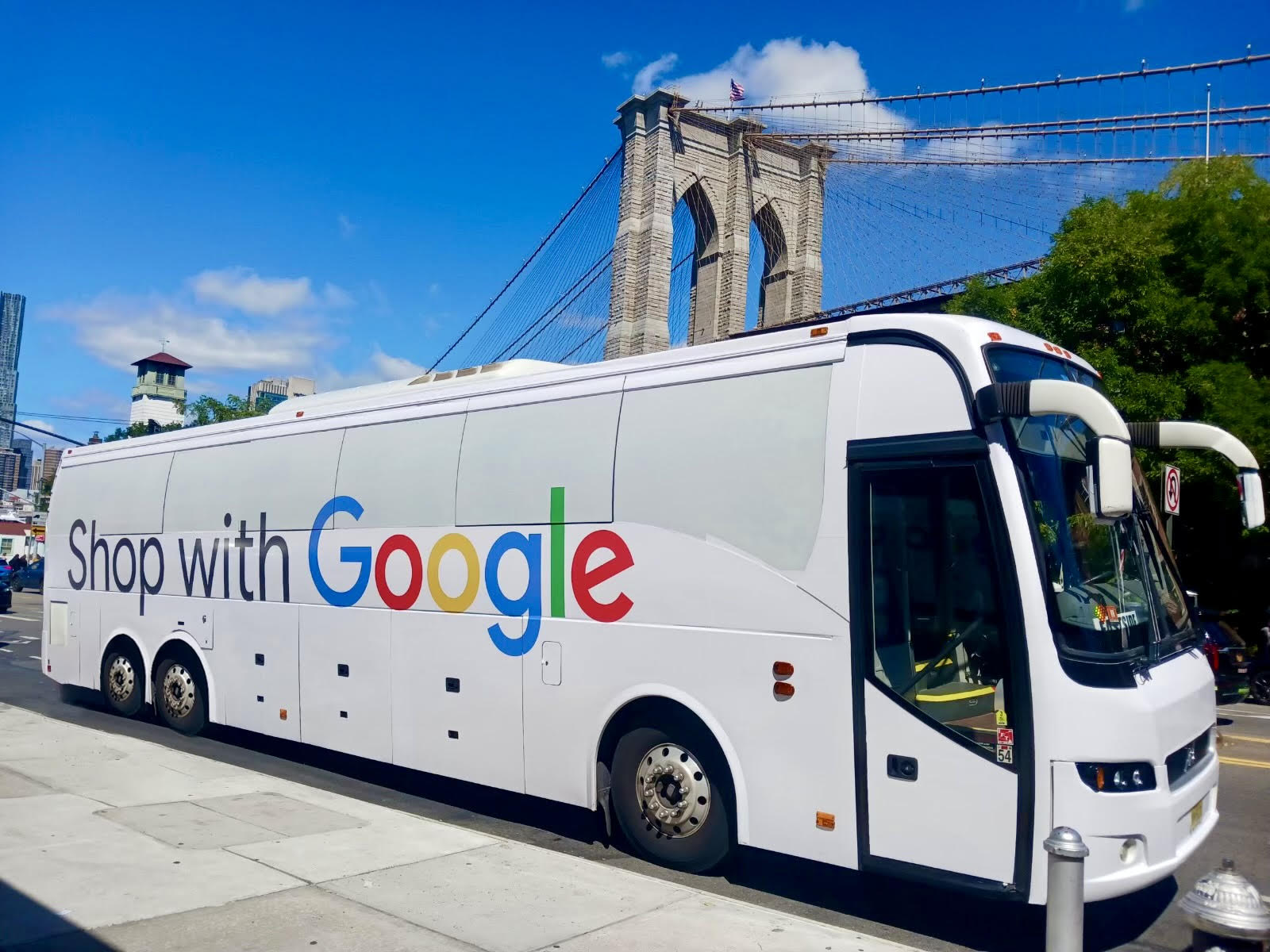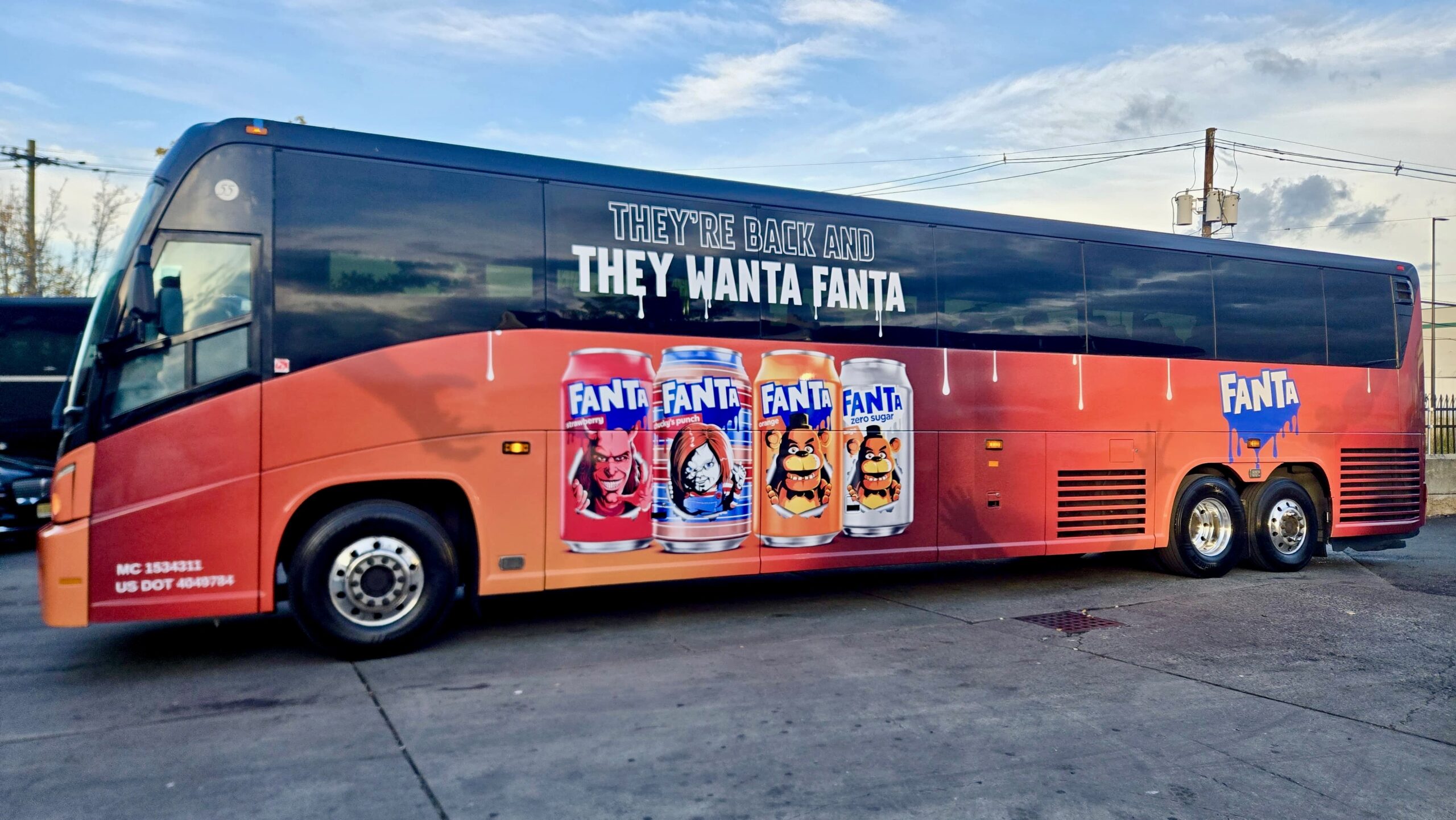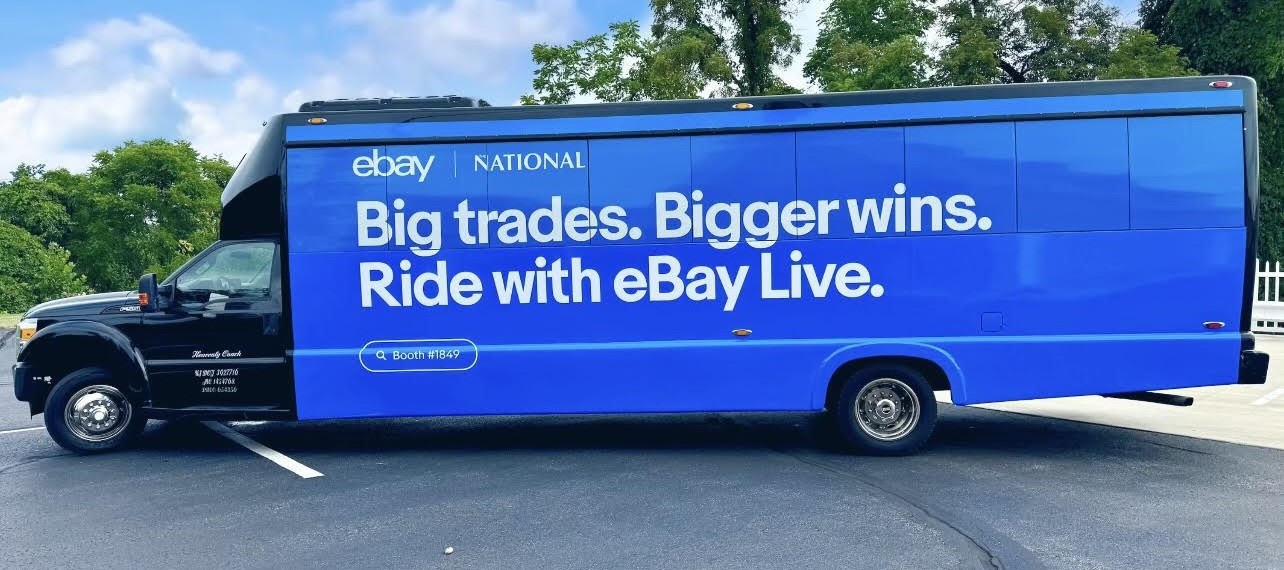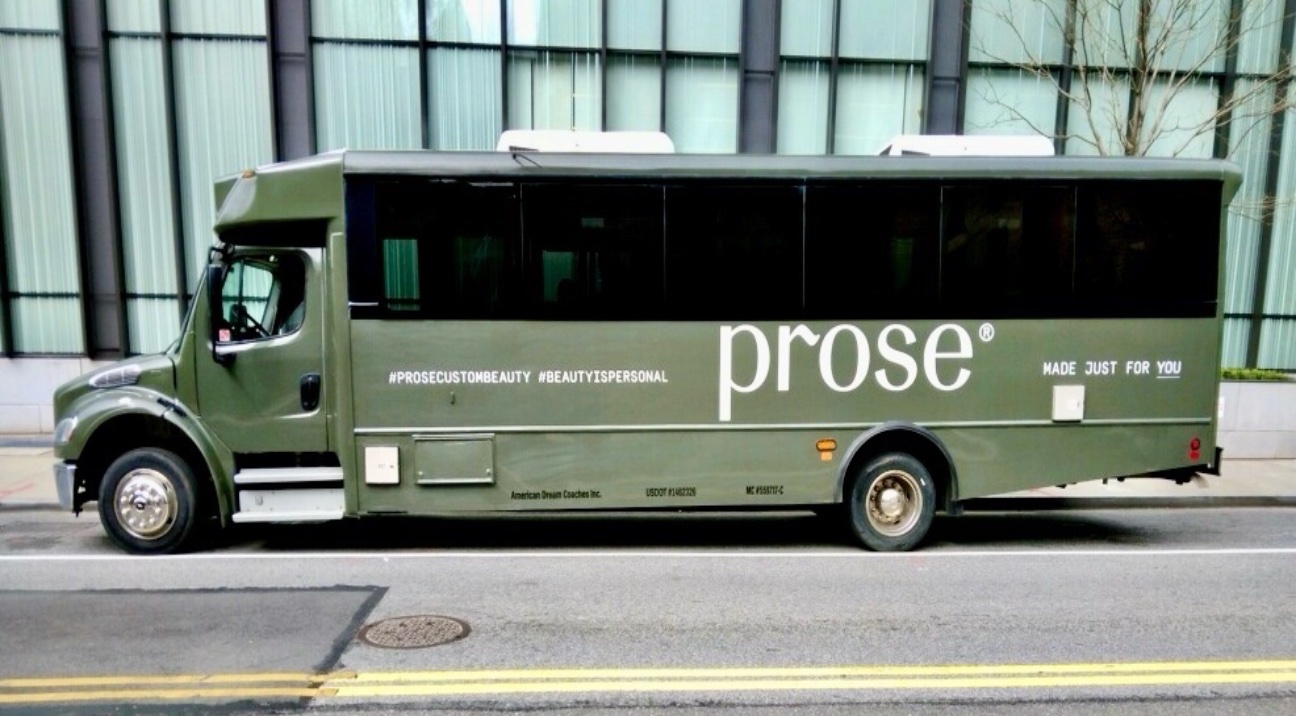

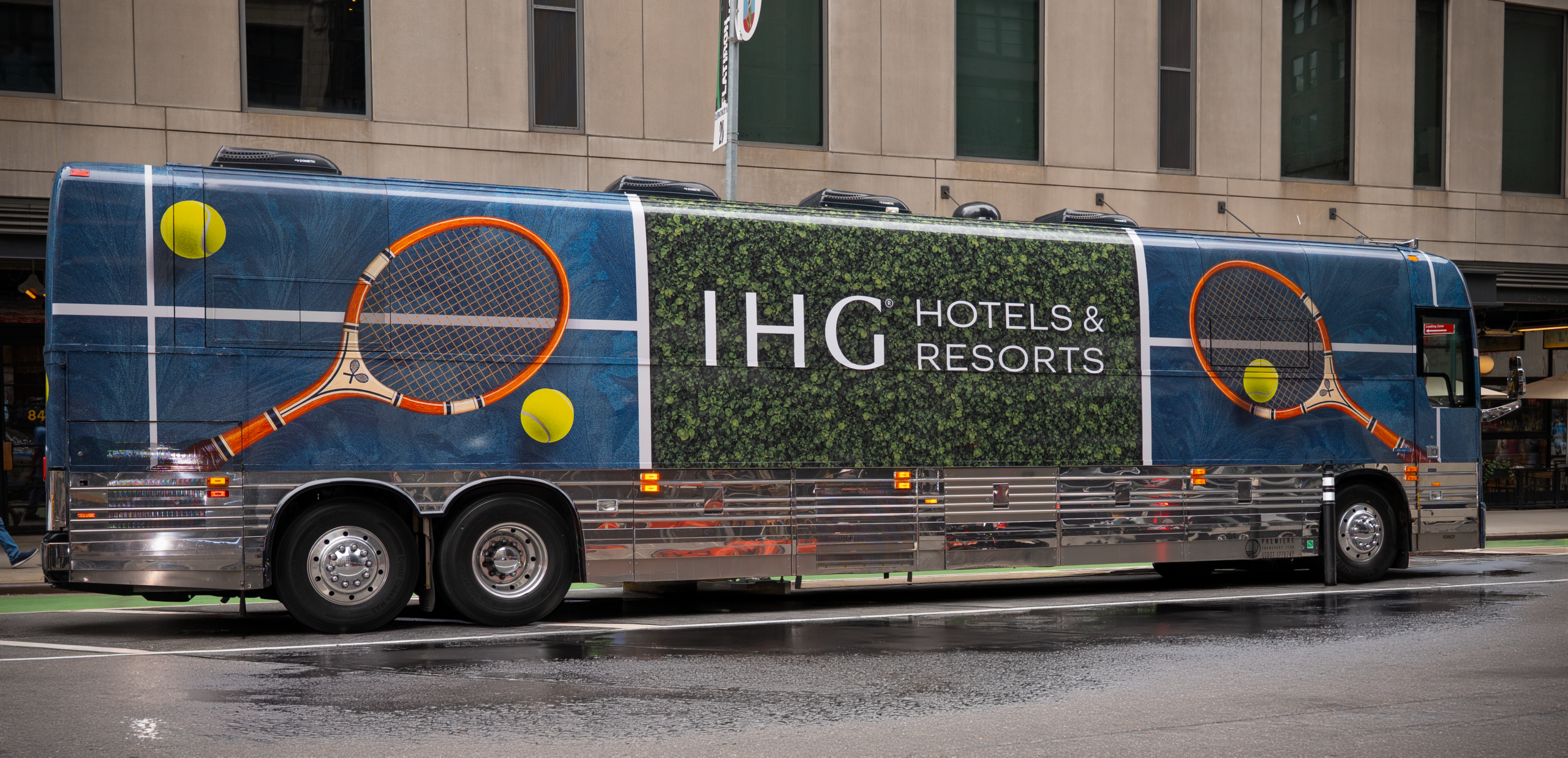
New York City is the single best market in America to put a wrapped bus on the street. More than 8 million residents, tens of millions of visitors every year, and the densest sidewalks in the country mean a wrapped bus here doesn’t just reach an audience. It swims through one, block after block, borough after borough, all day long. A single wrapped vehicle in a dense urban market generates an estimated 30,000 to 70,000 impressions per day, and New York’s crowds push toward the top of that range.
And here’s what most advertisers never learn: you don’t need to rent space on someone else’s bus to do it. You can run your own fully wrapped bus, on your own route, on your own schedule, parked exactly where your audience gathers. That’s the model this guide covers: how private bus wrap advertising works in New York, which boroughs and neighborhoods fit which goals, the formats and designs that win on these streets, when to time your campaign around the city’s calendar, and how to measure the results. If you’re new to the medium entirely, start with our complete guide to bus wraps, then come back. Let’s get into it.
Why New York Is America’s Best Bus Advertising Market:
Three facts make NYC unlike anywhere else you can put a wrapped bus.
The audience density is unmatched:
New York packs over 8 million residents into five boroughs and adds tens of millions of tourists on top, most of them moving on foot through a handful of famously crowded corridors. Midtown, Times Square, SoHo, and Downtown Brooklyn put hundreds of thousands of pedestrians on the street every single day. No other American city offers this many eyes at street level, at walking speed, within feet of your wrap.
The audience actually looks:
Bus advertising works everywhere, but it works differently in New York. In car-first cities, your ad is seen at 45 miles per hour. In Manhattan, traffic crawls, and sidewalks are packed, which means your wrap gets read, photographed, and posted, not just glimpsed. Nielsen research found 46% of U.S. adults searched for something after seeing an out-of-home ad, and out-of-home drives online search at nearly four times the rate its share of ad spend predicts. Slow streets and dense crowds amplify exactly that behavior.
Billboards can’t follow you here:
Large swaths of New York, from residential brownstone blocks to landmarked districts, have little or no billboard inventory at all, and the premium boards that do exist in places like Times Square carry some of the highest rates on Earth. A wrapped bus travels through the neighborhoods billboards can’t touch and parks in the sightlines they can’t buy. If you’re weighing the two formats, our bus wrap vs. billboard comparison breaks it down fully, but the short version for NYC is simple: the bus goes where the billboard can’t exist.
How Private Bus Wrap Advertising Works in NYC:
The model is beautifully simple. You wrap a vehicle you control, then you route it like media.
Your bus, your route, your schedule:
Instead of hoping your message lands on the right streets, you decide. Circle Midtown during lunch hour. Loop SoHo and Fifth Avenue on a Saturday afternoon. Run the Brooklyn waterfront during a festival weekend. Sit in slow crosstown traffic on purpose, because in this market, slow traffic is a feature: it means more people reading your wrap for longer.
Your parking spot is your billboard:
This is the advantage nothing else in New York advertising can match. A wrapped coach parked outside Madison Square Garden before a game, at the Javits Center during a convention, near the finish line on marathon Sunday, or along a Fashion Week venue block functions as a billboard in the exact locations where permanent billboards are impossible or unaffordable. You’re not buying a fixed spot for a month. You’re claiming the best spot in the city for the hours that matter, then moving to the next one.
The bus can be more than an ad:
Because the vehicle is yours for the campaign, it can work as a brand experience, not just a message. Sampling stations, mobile showrooms, influencer shuttles, press activations: the wrap draws the crowd, and the bus itself closes the deal. This is the experiential play that’s turned wrapped vehicles into a staple of product launches and event marketing.
Every vehicle size has a role:
- Full-size coaches and entertainer buses: the largest mobile canvases in the city, built for statement campaigns, tours, and event presence.
- Minibuses and shuttles: perfect for looping tight districts like SoHo, Williamsburg, or the Financial District where a big coach is overkill.
- Sprinter vans: the nimble option, able to thread narrow streets, park almost anywhere, and saturate neighborhood-level targets.
Our guide to bus wrap costs by vehicle type breaks down what each vehicle offers as a canvas and how size drives investment.
Borough-by-Borough Routing Strategy:
New York isn’t one market. It’s five, and a private fleet’s superpower is routing to each one deliberately.
Manhattan:
The flagship. Route through Midtown, Times Square, Fifth Avenue, and SoHo for the heaviest pedestrian exposure in North America, and lean into the slow crosstown streets where your wrap gets read for entire light cycles. Congestion pricing has thinned private car traffic in the core, leaving buses even more visually dominant. If the goal is maximum brand theater, press value, and social photos, Manhattan is the stage.
Brooklyn:
The culture play. Williamsburg, DUMBO, and Downtown Brooklyn deliver a younger, trend-driving audience that photographs what it likes. Brooklyn routing works brilliantly for consumer brands, entertainment, fashion, and anything that benefits from ending up on someone’s feed.
Queens:
The reach play. The most diverse borough in the world, dense commercial corridors in Flushing, Jackson Heights, and Astoria, and massive seasonal moments like the US Open in late August. Ideal for brands targeting specific communities and for healthcare and education campaigns that need neighborhood-level trust.
The Bronx:
The community play. Strong commercial corridors, loyal local audiences, and far less advertising competition than Manhattan. Repeated routing here builds the kind of neighborhood recognition that money can’t shortcut, which is why healthcare systems, schools, and community brands invest in it.
Staten Island:
The overlooked play. Lower ad clutter means a wrapped vehicle stands out more, and routing between residential centers and the ferry corridor catches commuters at both ends of their day.
Choosing Your Wrap Coverage for New York Streets:
NYC’s geometry changes the format math. Narrow streets, slow traffic, and packed sidewalks mean people see your bus up close and from the side, not from six lanes away.
- Full wraps are the statement format, and nowhere do they earn more than New York, where a fully wrapped bus becomes street theater and social content. Use them for launches, entertainment, and flagship campaigns.
- Partial wraps are the efficiency pick for sustained campaigns. Side coverage rides at exactly eye level for sidewalk crowds, which is where New York’s audience actually is.
- Logo and decal packages suit long-running fleet identity: clean, professional branding for shuttles and service vehicles working the city daily.
Not sure how much coverage your goal needs? Our breakdown of full wraps vs. partial wraps vs. decals walks through exactly how to choose.
Timing Your Campaign Around the NYC Calendar:
New York hands you a tentpole moment nearly every month, and a private wrapped bus is the only format that can chase all of them:
- Winter: holiday shopping floods Midtown and Fifth Avenue with shoppers and tourists, and New Year’s Eve turns the city into a global stage.
- Spring: convention season fills the Javits Center, baseball returns to two boroughs, and street traffic climbs with the temperature.
- Summer: festivals, outdoor concerts, and peak tourist density across all five boroughs, capped by the US Open drawing enormous crowds to Queens.
- Fall: New York Fashion Week in September, the film festival circuit, and the NYC Marathon in November, when more than a million spectators line the streets across all five boroughs.
The play is the same each time: route the bus through the gathering crowds, park it where the cameras are, and let concentration do the work. Event wraps are their own discipline and one of our specialties. See how we approach festival campaigns in our Coachella advertising guide, then map that playbook onto New York’s calendar.
Design Rules for New York Bus Wraps:
New York punishes weak creative faster than any market in the country. The rules:
- Win the sidewalk first. Your biggest NYC audience is pedestrians seeing the bus side-on from 10 to 30 feet. Design the sides as the hero, at eye level, with your brand readable in a glance.
- Six words or fewer. The viewing window is seconds. One idea, one dominant logo, one action. New Yorkers are professional ad-ignorers, and clutter permits them.
- Make it photographable. In this city, a great wrap earns free media. Bold color, wit, or visual surprise gets posted, and every post multiplies your impressions at zero cost.
- Give them something to type. Since search is the proven response to out-of-home, put a short, memorable brand name or URL where thumbs can find it, with a QR code sized for sidewalk distance, not highway distance.
- Reward the stare. Manhattan traffic means your rear panel gets read for a full light cycle. Give the drivers behind you a message worth remembering.
How the Process Works, Start to Finish:
One of the biggest advantages of the private-fleet model is speed. There’s no third-party inventory to wait on and no external approval process, so a New York campaign can move from first call to wrapped bus on the street in as little as 3 to 6 weeks:
| Phase | Weeks | What Happens |
|---|---|---|
| Strategy | 1 | Goal, boroughs, routing plan, vehicle, and coverage level decided |
| Design | 1 to 3 | Creative built and adapted to the exact vehicle’s dimensions |
| Production | 2 to 4 | Vinyl printed and quality checked |
| Installation | 3 to 5 | Professional wrap installation with photo verification |
| Live | 3 to 6 | Bus on route, monitoring and reporting begin |
For event-driven campaigns, work backward from the event date with buffer, because design and production windows compress but never disappear. And for what actually determines your final investment, from vehicle size to design complexity, see our full breakdown of how much a bus wrap costs. Every honest quote starts with those factors, and we publish ours instead of hiding them.
Measuring a New York Campaign:
The city that gives you the most impressions also gives you the tools to prove them:
- Branded search lift: watch branded search volume in the New York market before, during, and after the flight. With out-of-home driving search at nearly four times its spend share, this is your cleanest citywide read.
- QR codes and campaign URLs: direct, attributable response, and scan data tell you which neighborhoods and stops pull hardest.
- GPS route logs: because the fleet is dedicated, you get exact records of where the bus went and when, which turns impression estimates into documented coverage.
- Geo-targeted follow-up: retarget the neighborhoods your bus covered with digital ads, turning street impressions into a full-funnel sequence.
Set your baseline two weeks before launch. It costs nothing, and it’s the difference between “we think it worked” and a chart your CFO believes.
Common Mistakes in NYC Bus Advertising:
- Treating the five boroughs as one market. A routing plan built for Manhattan wastes hours in Queens and vice versa. Match the route to your actual customer map.
- Designing for drivers in a pedestrian city. Highway-scale design reads as space from a Manhattan sidewalk. Design for 20 feet, not 200.
- Routing without a parking strategy. The parked hours outside venues and events are often the most valuable of the day. Plan them like media placements, because that’s what they are.
- Booking late for event season. Fashion Week, marathon weekend, and Q4 production calendars fill early. The best moments go to the planners.
- Running one week and judging the medium. Frequency is the entire mechanism of vehicle advertising. New Yorkers need to see you repeatedly before you become part of their city.
FAQ: Bus Wrap Advertising in NYC:
How much does bus wrap advertising cost in New York?
It depends on the vehicle, the coverage level, and the campaign length, which is why we publish transparent starting estimates rather than vague ranges. Start with our bus wrap cost by vehicle type guide, then talk to us about your specific campaign.
How many people will see my wrapped bus in NYC?
A wrapped vehicle in a dense urban market generates an estimated 30,000 to 70,000 impressions per day, and New York’s pedestrian density pushes toward the top of that range. Routing through high-traffic corridors and parking at major gathering points pushes it further still.
Do I need to own a bus to advertise this way?
No. We provide the vehicles, from sprinter vans to full-size entertainer coaches, wrap them in your campaign, and route them wherever your audience is. One partner handles the fleet, design, printing, installation, and logistics end to end.
How far in advance should I book?
Standard campaigns move from first call to street in as little as 3 to 6 weeks. For event-driven campaigns around moments like Fashion Week, the marathon, or the holidays, start 2 to 3 months out so design and production land comfortably before the moment does.
Which borough is best for bus advertising?
The one your customers are in. Manhattan maximizes visibility and press value, Brooklyn reaches culture-driving audiences, Queens delivers diverse reach and huge seasonal moments, the Bronx builds neighborhood-level trust, and Staten Island offers standout visibility with minimal ad clutter.
Do bus wraps work in a city with this much advertising?
Yes, precisely because of how they move. A static ad in New York becomes wallpaper, but a wrapped bus keeps entering new blocks and new sightlines all day, and slow traffic gives people time to actually read it. Add the ability to park at the day’s biggest gatherings, and NYC is arguably where the format performs best in the country.
Conclusion:
New York rewards bus wrap advertising like no other city: the densest street-level audience in America, neighborhoods billboards can’t touch, a calendar full of moments a wrapped bus can own, and slow streets that turn every red light into reading time. With a private wrapped bus, you add the one thing city advertising never gives you: control. Your route, your schedule, your parking spot at the center of the action. Get the boroughs, the creative, and the timing right, and the city does the rest: 30,000 to 70,000 impressions at a time.
Ready to Put Your Brand on New York’s Streets?
We wrap and route buses across all five boroughs, from single sprinters looping SoHo to full entertainer coaches timed to the city’s biggest events, with our own fleet and everything handled end to end: design, printing, installation, routing, and logistics. Explore our New York bus wrap services, browse real campaigns in our case studies, then get a free quote or call 888-646-6660. Tell us your goal and your audience, and we’ll map the boroughs, routes, and vehicles your campaign actually needs.
Sources: Search activation data from Nielsen’s OOH Online Activation Survey; impression figures are industry estimates from OAAA and out-of-home research and vary by route, format, and season.