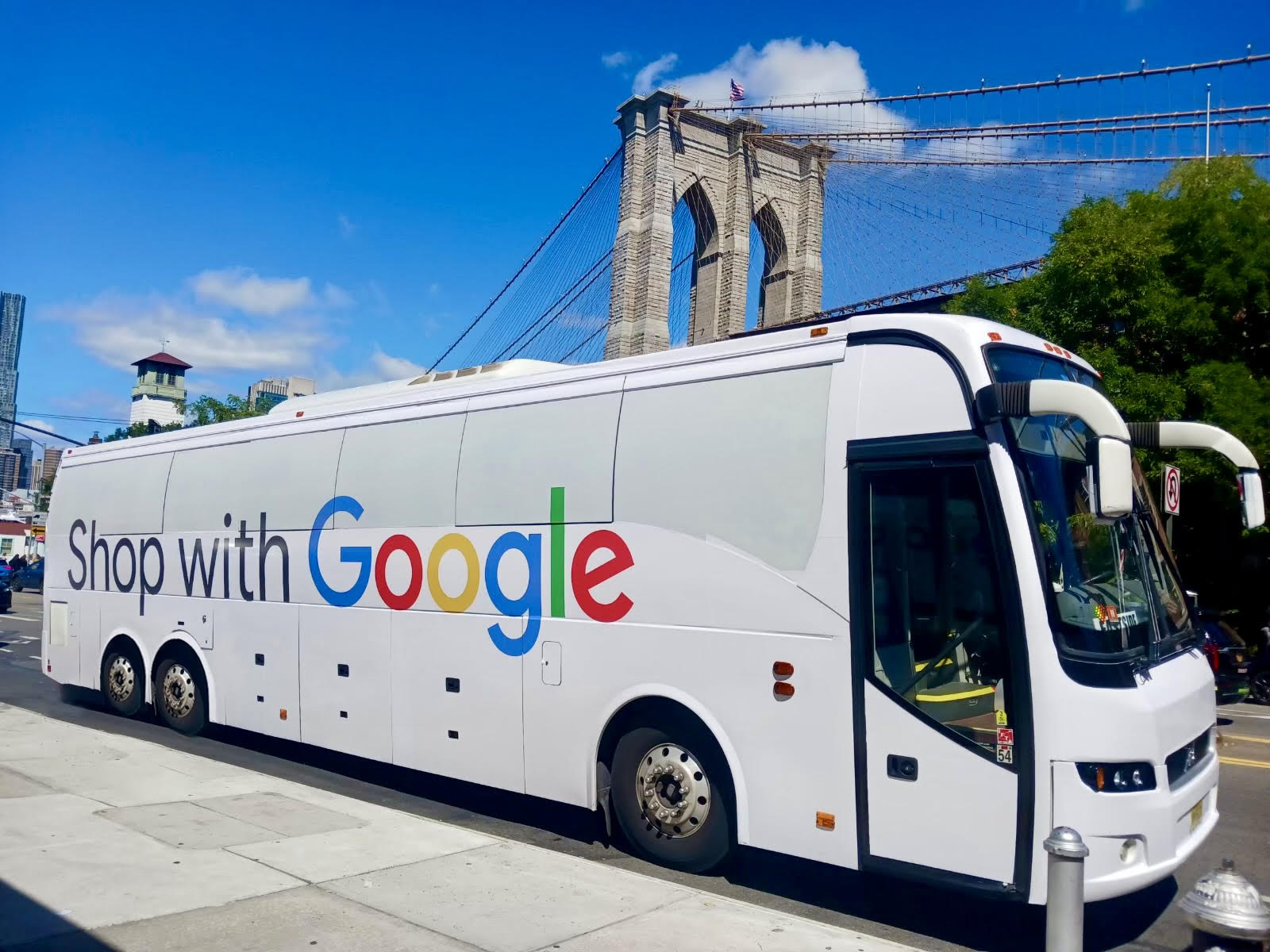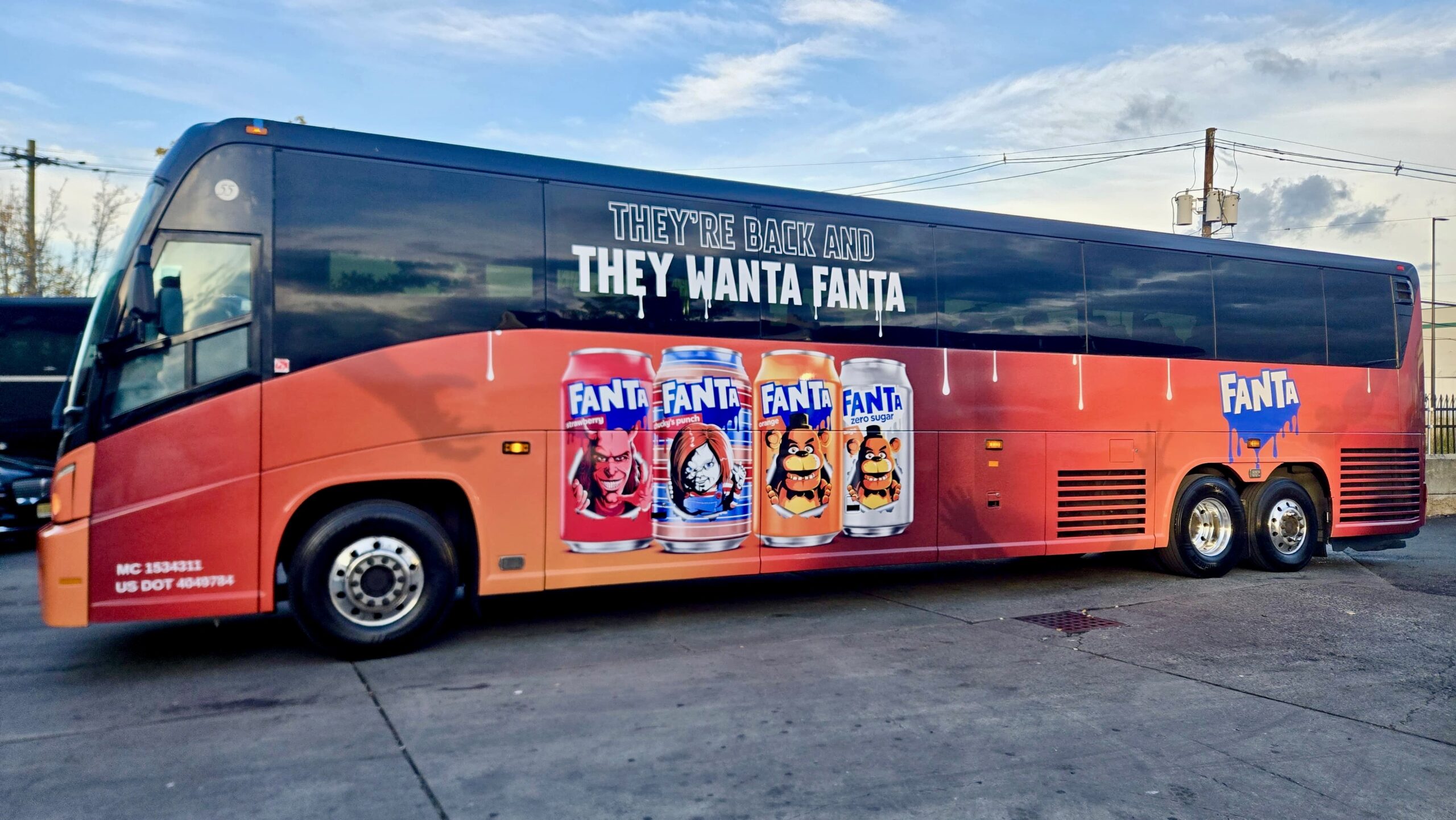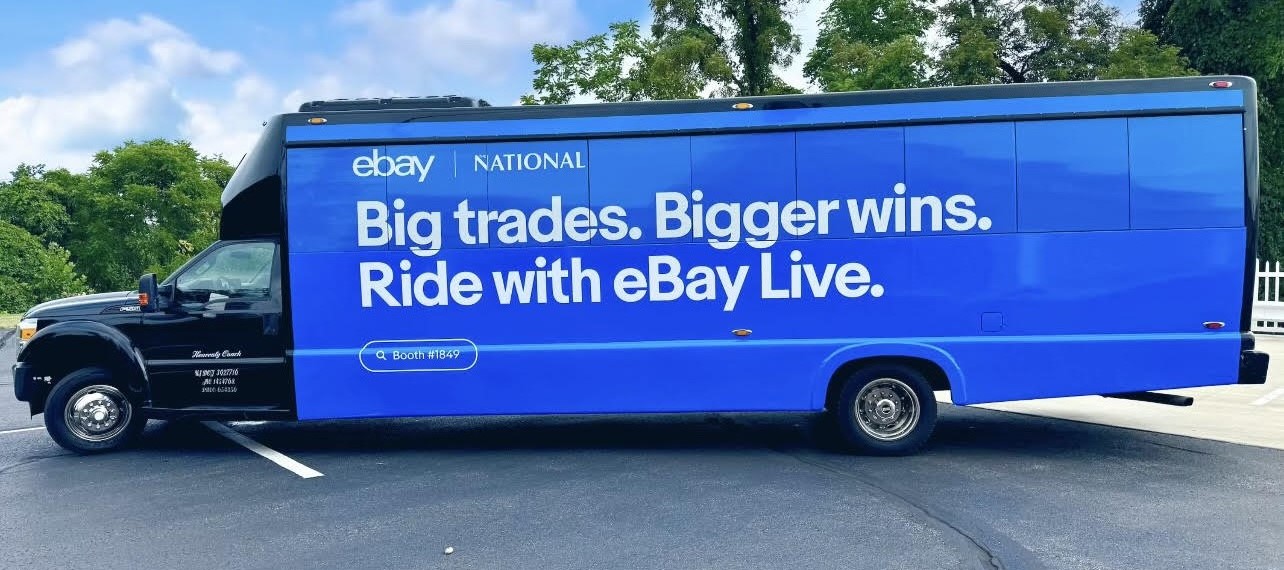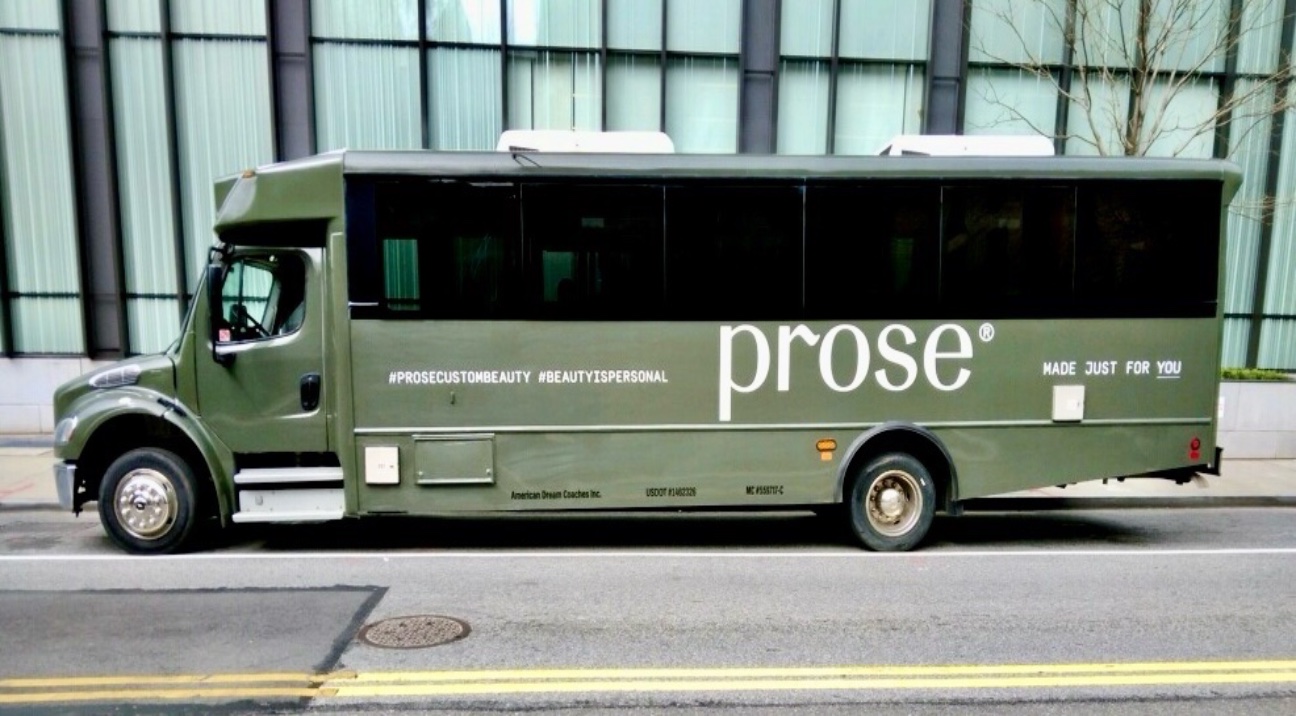

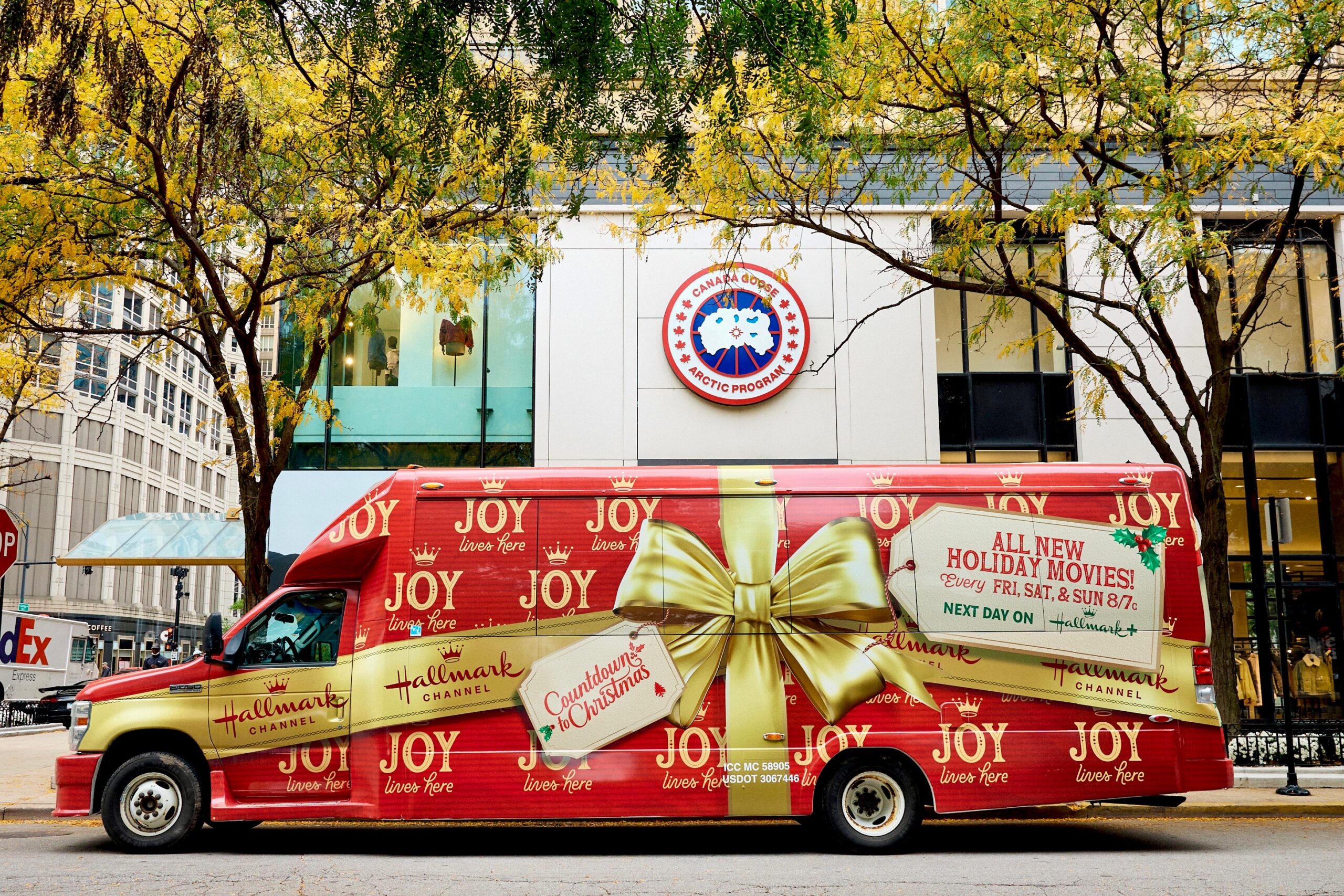
The holiday season is the single biggest advertising and logistics window of the year, and it’s also the shortest. Bain & Company projects US holiday retail sales will top $1 trillion for the first time in November and December 2026, with roughly 70% of that spending happening in physical stores. Mastercard’s forecast calls for 5.5% year-over-year growth, the strongest holiday season in four years.
Read that again: 70% in stores. While most brands pour their holiday budgets into crowded digital feeds, the majority of the money is being spent by people who are physically out in the world, driving to malls, parking at shopping centers, and walking through downtown districts. That’s exactly where a wrapped bus lives, generating an estimated 30,000 to 70,000 impressions a day in the middle of the heaviest retail traffic of the year.
The other half of the season is logistics. Corporate parties, mall park-and-ride shuttles, light tours, parades, and family travel all need vehicles during the exact six weeks when vehicles are hardest to get. This guide covers both: how to use holiday bus wraps as seasonal advertising, how to plan holiday transportation that actually works, and how to combine them so one vehicle does both jobs.
One timing note before we start. It’s mid-October. Wrap production needs roughly 3 to 6 weeks from approved design to installed vehicle, which means decisions made this month go live in mid-November, right as the season opens. Decisions made in late November go live for the final week. The calendar is the hard constraint on everything below.
Why the Holiday Season Rewards Mobile Advertising:
The money is in physical stores
Around 70% of holiday retail spending happens brick and mortar. Those shoppers aren’t at a desk; they’re in cars and on sidewalks in shopping districts, which is the only place a wrapped bus can reach them and a social ad can’t.
Shopping starts earlier every year
October is now the most common month for shoppers to begin, with Adobe projecting $95.8 billion in US online spending in October alone, up 8% year over year, and roughly 43% of shoppers starting before November. A campaign that launches December 1 has already missed a third of the season.
Spending climbs right through Christmas Eve
Mastercard’s analysis found average purchase value rose every single day beginning December 15 and peaked on Christmas Eve, with more than 6% of annual mall spending happening in the week before Christmas alone. The last ten days aren’t a wind-down; they’re the most valuable stretch of the entire year, and they’re when shopping districts are most congested, which means longer dwell time for anything parked or driving nearby.
Digital is saturated and expensive
Everyone knows the holidays are coming, so digital ad auctions get brutally competitive in Q4 and costs spike. Street-level advertising doesn’t surge-price the same way, and a wrapped bus reaches shoppers at the moment they’re already out spending, which is a far shorter distance to purchase than a feed impression.
Part 1: Holiday Bus Wraps as Seasonal Advertising
Who holiday wraps work best for:
Retailers and shopping centers
Malls, outlet centers, and retail districts use wrapped vehicles to pull traffic from surrounding neighborhoods, promote extended hours, and advertise events like Santa photos and late-night shopping.
Consumer brands and product launches
Electronics, toys, apparel, and gifting categories compete hardest in Q4. Mastercard expects consumer electronics and software to deliver outsized growth this season, and a wrapped vehicle in a shopping corridor puts you in front of buyers already in purchase mode.
Restaurants, entertainment, and experiences
Gift cards, holiday menus, seasonal shows, and events all sell on impulse, and impulse responds to visibility.
Local service businesses
Home services, cleaning, and delivery businesses all see seasonal demand spikes, and a wrapped van circulating neighborhoods before the holidays is direct-to-doorstep advertising.
Nonprofits and seasonal campaigns
Toy drives, food banks, and giving campaigns rely on awareness during a narrow window, and a wrapped vehicle at collection points and community events does double duty as a visual anchor.
Design rules for holiday wraps:
Lean seasonal, not literal
The strongest holiday wraps feel seasonal through color, warmth, and mood rather than stacking every Christmas cliché onto one vehicle. A rich palette, a warm glow, and generous white space read as holiday from a hundred feet. Nine snowflakes, three reindeer, and a snowman read as clutter.
Six words still apply
The viewing window is three to seven seconds, whatever the season. One offer, one brand, one action. Holiday shoppers are busy, distracted, and often driving, which argues for less text, not more.
Make the offer specific
“Happy Holidays from [Brand]” is a greeting card. “Extended hours through Dec 24” or “Free gift wrapping all December” is an advertisement. Seasonal campaigns work best when they give people a concrete reason to act now, because the deadline is built into the calendar.
Design for winter light
Days are short, so your wrap spends a meaningful share of its hours in low light, under streetlights, and in rain or snow glare. High contrast survives those conditions. Subtle tonal designs disappear by four in the afternoon.
Plan for photos
Holiday displays and festive vehicles get photographed. A wrap designed with a clean focal point and bold color turns into social content, especially when the vehicle is parked at markets, tree lightings, and light displays.
For help choosing coverage levels, see our guide to full wraps vs. partial wraps vs. decals, and our cost by vehicle type breakdown explains how vehicle size shapes the investment.
Where to route during the holidays:
Seasonal routing is different from the rest of the year because the crowds move to predictable places.
Shopping centers and retail corridors
Mall ring roads, outlet center approaches, and main retail strips carry concentrated traffic from Black Friday weekend through Christmas Eve. Park where shoppers walk from lots to entrances.
Downtown districts and holiday markets
Tree lighting, Christmas markets, ice rinks, and seasonal pop-ups concentrate pedestrians in walkable areas for weeks at a time, which is rare outside the holidays.
Light displays and seasonal attractions
Drive-through light shows and neighborhood display destinations create long lines of slow-moving cars with families inside. Few advertising environments deliver more dwell time.
Parade routes and community events
Holiday parades draw enormous local crowds along fixed routes, and a wrapped vehicle staged nearby reaches a captive audience that arrived early and is standing still.
Residential neighborhoods
For local service businesses and delivery brands, the neighborhoods themselves are the target, and a wrapped van making rounds becomes familiar fast.
Timing your routes to the holiday rhythm:
The season has its own clock. Weekday evenings fill shopping centers after work, weekends run heaviest from late morning through early evening, Black Friday weekend and the Saturday after it are among the busiest in-store traffic days of the entire period, and the final week before Christmas delivers the highest-value shoppers of the year. Route against that rhythm rather than driving the same loop every day.
Part 2: Holiday Transportation
The other half of the season. Demand for vehicles concentrates into six weeks, and the organizations that book early are the ones whose events run smoothly.
Corporate holiday parties
The most common holiday transportation need, and the one most often underestimated. A shuttle between the office, hotels, and the venue solves three problems at once: guests arrive together and on time, nobody drives after drinking, and the company looks like it planned properly.
Departure waves matter here. Not everyone leaves at once, so a plan with a single pickup at the end of the night creates a crowd standing outside in December weather. Multiple return runs solve it.
Retail and mall shuttles
Shopping centers run park-and-ride shuttles from overflow lots during peak weekends, because parking capacity is the single biggest friction point in holiday retail. If the shuttle is wrapped in the center’s seasonal campaign, the logistics solution becomes a marketing asset.
Holiday light tours
A genuine seasonal business in most metros. Groups book vehicles to tour neighborhood light displays, and demand for the right dates sells out early. Comfortable seating, good heat, large windows, and a driver who knows the route are what make these work.
Parades and community events
Towns and organizations need vehicles for parade entries, volunteer transport, and staging logistics. A wrapped bus in a holiday parade is a float that advertises for the rest of the season too.
Family and group travel
Large families traveling together, airport runs during the busiest travel weeks of the year, and multi-generation gatherings all benefit from one vehicle instead of five cars in winter weather.
Charity and volunteer operations
Toy drives, meal deliveries, and giving campaigns move people and goods constantly through December, often with volunteer teams that need coordinating.
What to get right in holiday transportation
Book early, and earlier than feels necessary
Vehicle availability in November and December is the tightest of the year, and the prime dates, the two weekends before Christmas and the week of office parties, go first.
Build in weather buffer
Winter means traffic delays, icy mornings, and slower loading. Schedules built with no margin fail on the first cold night.
Plan for the dark
Early sunsets change pickup logistics. Well-lit, clearly marked pickup points matter far more in December than in June, and a clearly branded vehicle helps guests find their ride in the dark.
Keep guests comfortable
Heating, boarding speed, and sheltered waiting areas are the difference between a pleasant evening and a complaint. In December, standing outside for ten minutes is a real cost.
Combining Both: The Smartest Holiday Play
Here’s where the two halves meet. If you’re already paying for holiday transportation, the vehicle can carry your branding at the same time.
A wrapped shuttle running a corporate party is advertising your company to the entire city between runs. A wrapped mall shuttle moving shoppers from overflow parking is promoting the center’s holiday campaign everywhere it drives. A wrapped light-tour bus is marketing the tour operator to every family that sees it.
The transportation is already in the budget. The wrap turns an operating cost into a media asset working through the highest-traffic weeks of the year. Our full breakdown of that approach is in our guide to event transportation and bus wraps.
Cold Weather and Winter Wrap Considerations
This is where seasonal campaigns differ technically, and where inexperienced installs go wrong.
Installation needs controlled temperature
Vinyl adhesive requires warmth to bond properly. Professional installation happens in a heated, controlled environment, never outdoors in winter conditions, and the vehicle surface itself needs to reach proper temperature before application begins. A wrap applied to a cold surface can lift at the edges within weeks.
Build extra time into winter schedules
Vehicles coming in from the cold need time to acclimate before installation starts. It’s a small factor on its own, but it compounds with the industry’s busiest production season, which is exactly why December installs are a bad plan and October and November installs are a good one.
Road salt and winter washing
Salt, slush, and grit are hard on vehicle surfaces. Hand washing protects the wrap, and high-pressure washing aimed directly at wrap edges is the fastest way to damage one. For a seasonal campaign the exposure window is short, but the care habits still matter.
Plan removal before you need it
Seasonal wraps come off. Professional removal is straightforward and leaves the paint underneath in good condition, but it should be scheduled rather than improvised in January. Many brands also keep seasonal vehicles wrapped into the post-Christmas sales period, since late December and early January still carry heavy retail traffic.
Your Holiday Timeline:
Working backward from a season that effectively opens with Black Friday weekend:
| Timeframe | What to Do |
|---|---|
| Mid-October (now) | Decide scope: wrap campaign, transportation, or both. Reserve vehicles. |
| Late October | Finalize creative concept and offers; confirm routes and event dates |
| Early November | Approve artwork; production and printing |
| Mid-November | Installation with photo verification; driver and route briefing |
| Late November | Campaign live for Black Friday weekend and the season opening |
| December | Peak routing, party shuttles, light tours, final-week retail push |
| Early January | Post-holiday sales period, then scheduled wrap removal |
The two bottlenecks are production time and vehicle availability, and both get worse every week you wait. A decision this month is comfortable. A decision in late November is a scramble for whatever is left.
Mistakes to Avoid:
- Starting in December. The season’s biggest shopping weekend happens in November, and roughly 43% of shoppers begin before November even starts. Launching in December means paying for a campaign that misses most of its own season.
- Booking transportation late. The two weekends before Christmas and corporate party season fill first. This is the tightest vehicle market of the year.
- Designing a greeting card instead of an ad. Warm wishes are nice. A specific offer with a deadline is what moves shoppers who are already out buying.
- Overloading the design. Every holiday motif at once reads as noise at thirty miles per hour. Pick one seasonal idea and commit.
- Ignoring the final week. Spending peaks on Christmas Eve, and the week before it drives a disproportionate share of annual mall spending. Plan routes for that week deliberately rather than coasting.
- Skipping the post-holiday window. Late December and early January return and sale traffic is substantial, and the wrap is already installed.
FAQ: Christmas and Holiday Bus Wraps and Transportation
When should I book holiday bus wraps and transportation?
As early as possible, and realistically by mid to late October for a campaign that’s live before Black Friday weekend. Wrap production takes roughly 3 to 6 weeks from approved art, and vehicle availability in November and December is the tightest of the year.
Is it too late to run a holiday campaign this year?
Not if you move now. Decisions made in October go live in mid-November with the full season ahead of them. Even a December launch can capture the final week before Christmas and the post-holiday sales period, which together carry significant traffic, but the earlier the start, the more of the season you own.
Can wraps be installed in cold weather?
Yes, when the work happens in a heated, controlled environment and the vehicle surface is brought to proper temperature first. Vinyl adhesive needs warmth to bond correctly, which is why professional indoor installation matters more in winter than at any other time of year.
Can you provide both the vehicles and the wraps?
Yes, that’s our model. We supply the fleet, from sprinter vans to full-size coaches, wrap them in your seasonal creative, and handle routing and logistics. One partner instead of coordinating a charter company and a print shop during the busiest six weeks of the year.
What’s the best type of vehicle for holiday campaigns?
It depends on the job. Full-size coaches for party transport, group light tours, and maximum advertising presence. Minibuses and shuttles for mall park-and-ride routes and tighter downtown districts. Sprinter vans for neighborhood service businesses, VIP runs, and flexible scheduling.
Should seasonal wraps come off in January?
Not necessarily right away. Post-Christmas sales and return traffic keep shopping districts busy into January, and many brands keep seasonal wraps running through that window before scheduling professional removal.
Do holiday wraps work for nonprofits and community campaigns?
Very well. Toy drives, food banks, and giving campaigns depend on awareness in a short window, and a wrapped vehicle serves as both a visible collection point and a moving reminder across the whole community.
Conclusion:
The holidays concentrate a year’s worth of retail attention into six weeks, with over a trillion dollars in spending and roughly 70% of it happening in physical stores where shoppers are driving, parking, and walking. That’s the audience a wrapped bus reaches, at exactly the moment they’re spending.
The same six weeks create the year’s tightest demand for vehicles, as parties, shuttles, tours, and parades all land at once. The organizations that handle both well do it by treating the two as one decision: wrap the vehicle you were already going to need, and let it advertise through the busiest weeks of the year while it works.
The only real constraint is the calendar, and it doesn’t move. Production takes weeks, vehicles book out, and the season opens the day after Thanksgiving whether you’re ready or not.
Get Your Holiday Campaign on the Road:
We provide the fleet and the wraps together, from sprinter vans to full-size entertainer coaches, with design, printing, professional climate-controlled installation, routing, and logistics handled end to end. Holiday dates fill fast, so the sooner we talk, the more options you’ll have.
See real campaigns in our case studies, then get a free quote or call 888-646-6660. Tell us your dates, your markets, and whether you need advertising, transportation, or both, and we’ll build the holiday plan around them.
Sources: Holiday retail forecasts from Bain & Company (2026 holiday forecast), Mastercard Economics Institute (2026 holiday forecast), Adobe Analytics (2026 holiday online spending forecast), and National Retail Federation holiday data; impression figures are industry estimates and vary by route, market, and season.