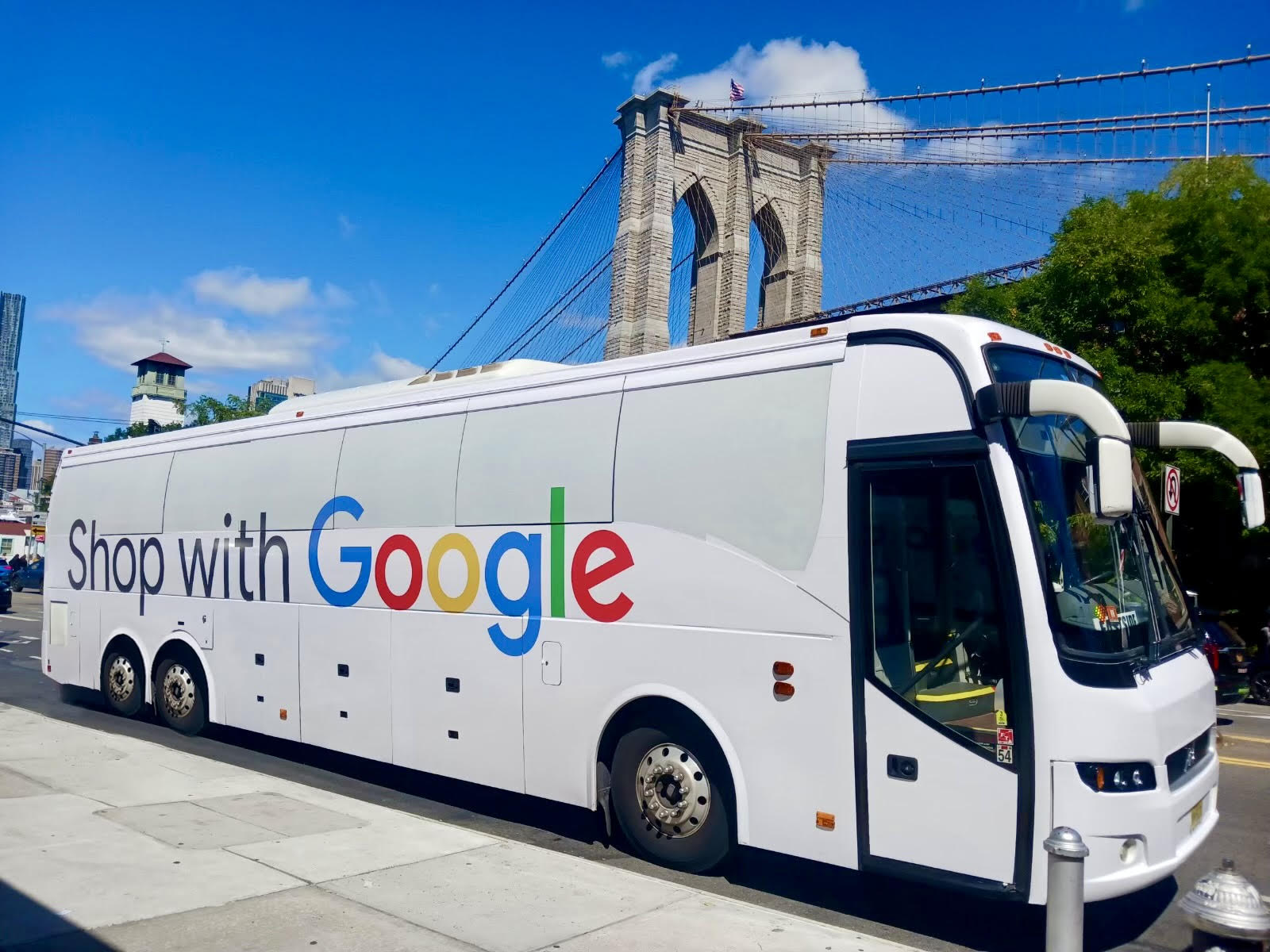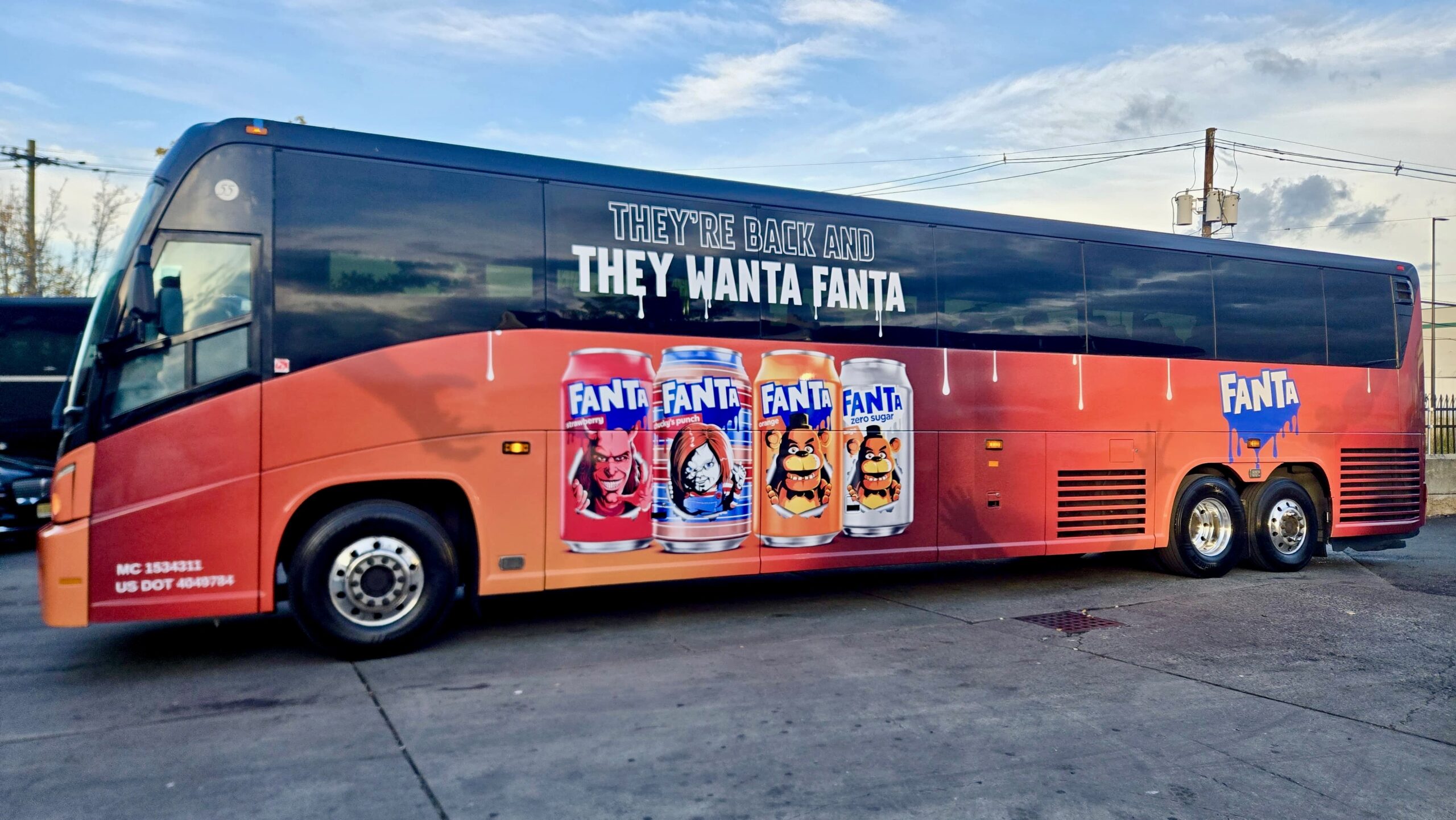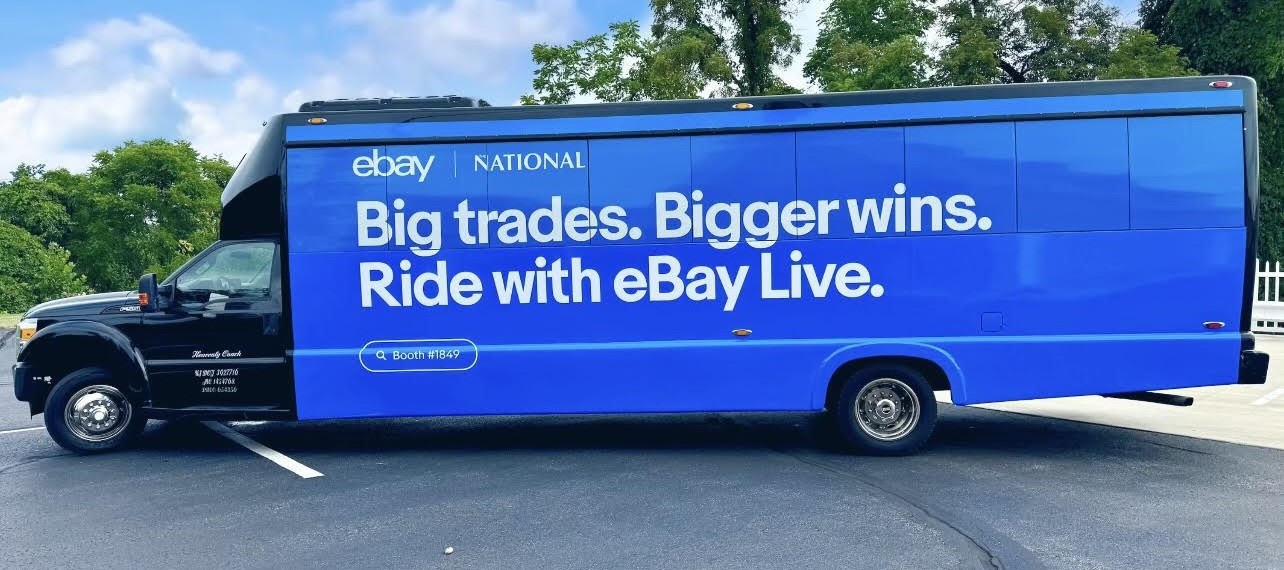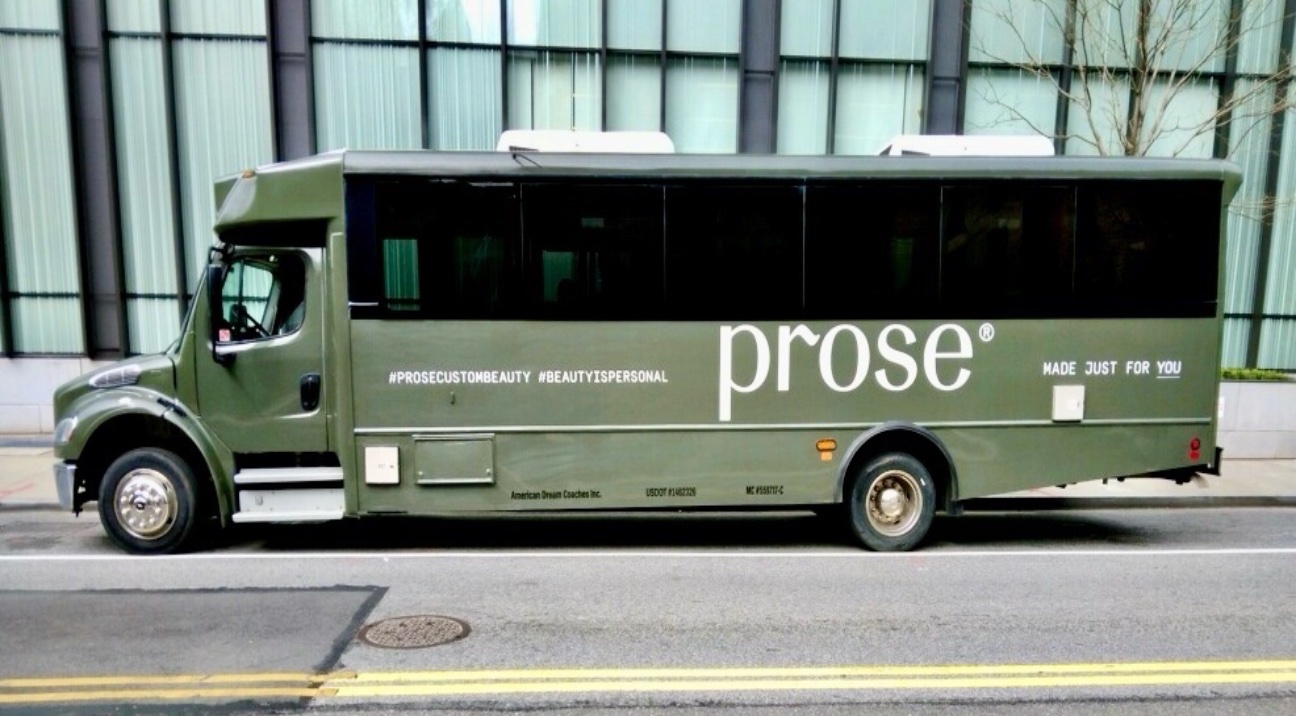


Los Angeles is the second-largest media market in America and the most car-dependent major city in the country, where 92% of residents commute by car, and the average driver spends about 95 minutes a day behind the wheel- the highest in the nation. That’s 95 minutes of a captive audience staring at whatever shares the road with them. A wrapped bus in LA generates an estimated 30,000 to 70,000 impressions per day, and unlike a billboard bolted to one freeway, it can chase traffic across a metro that has no single center.
That last point is the whole game in LA, and it’s where most campaigns go wrong. This guide covers how bus wrap advertising actually works in Los Angeles: why the city’s sprawl breaks traditional outdoor advertising, how to route a wrapped bus across LA’s many centers, which neighborhoods and freeways deliver what, how to design for windshield viewing instead of sidewalk viewing, and how to time campaigns around the entertainment calendar that runs this town. New to the medium? Start with our complete guide to bus wraps, then come back.
Why Los Angeles Is Built for Bus Wrap Advertising:
Three things about this city make a moving ad unusually powerful.
LA lives in its cars
Ninety-two percent of Angelenos commute by car, with round trips running about 16% longer than the national average, and the typical resident drives roughly 143 miles every week. Nobody in LA is scrolling past your ad, because they’re driving. The 405, 101, 110, 10, and 5 carry millions of people daily through congestion that turns every commute into extended viewing time. Industry research shows urban congestion increases outdoor ad visibility significantly, and no American city supplies more congestion than this one.
Traffic that’s terrible for drivers is perfect for advertisers
Stop-and-go traffic is a gift to a wrapped vehicle. At a standstill on the 101, the vehicle beside you isn’t a passing blur; it’s the only thing to look at. Your wrap gets studied, not glimpsed. Nielsen research found 46% of U.S. adults searched for something after seeing an out-of-home ad, with out-of-home driving online search at nearly four times the rate its share of ad spend predicts. Give people minutes instead of seconds, and that response climbs.
The city has no single center to buy
Los Angeles doesn’t funnel into one downtown. Jobs, culture, and commerce are spread across the Westside, Century City, Burbank’s Media District, the South Bay, Downtown, and the San Fernando Valley. That fragmentation is exactly why fixed advertising struggles here: a billboard on one freeway captures one corridor at one time of day, while your audience is scattered across a dozen activity zones. A wrapped bus solves what a billboard can’t. It moves between the centers instead of waiting at one of them.
How Private Bus Wrap Advertising Works in LA:
The model is simple: you wrap a vehicle you control, then you route it like a media.
Your route is your media plan
Instead of buying a fixed location and hoping your audience passes it, you decide where the brand shows up hour by hour. Sit in the morning crawl on the 405 heading to the Westside. Circle Century City and Beverly Hills at lunch. Cover Hollywood and West Hollywood in the evening. Hit the beach corridors from Santa Monica to Venice on the weekend. One vehicle, many markets, all in a single day.
Your parking spot is your billboard
This is the advantage nothing else in LA advertising can match. A wrapped coach parked outside a Staples-era arena crowd downtown, at a studio lot in Burbank, near a premiere on Hollywood Boulevard, or along Abbot Kinney on a Saturday functions as a billboard in places where permanent billboards are impossible or astronomically priced. The Sunset Strip is the most famous outdoor corridor in the country and priced accordingly. A wrapped bus can drive it, park near it, and work the same audience without renting the sky above it.
The bus can be the activation
Because the vehicle is yours for the campaign, it does double duty: mobile showroom, sampling station, press shuttle, pop-up. In a city built on entertainment launches and influencer culture, a wrapped bus that opens its doors becomes content, not just an impression. That’s the experiential play, and LA rewards it more than any market in America.
Match the vehicle to the mission
Full-size coaches and entertainer buses
The largest canvases on the road, sized for freeway visibility and built for tours, studio campaigns, premieres, and statement brand presence.
Mini buses and shuttles
Ideal for tighter districts like Downtown, Culver City, Pasadena, or Santa Monica, and for repeat loops that build neighborhood frequency.
Sprinter vans
The nimble option for canyon roads, beach parking, tight Hollywood streets, and neighborhood-level saturation where a coach is overkill.
Our guide to bus wrap cost by vehicle type breaks down what each vehicle offers as a canvas and how size shapes your investment.
Where to Route: LA Neighborhood and Corridor Strategy:
LA isn’t one market. It’s a dozen, and routing is how you choose.
The freeway corridors
The 405
The spine of the Westside and the most reliably congested stretch in the country. Routing here reaches affluent Westside and South Bay commuters during the longest dwell times in American traffic.
The 101
Cuts from the Valley through Hollywood and into Downtown, connecting the entertainment industry’s home and workplace. The corridor of choice for studio, streaming, and music campaigns.
The 10
The east-west artery linking Santa Monica to Downtown and beyond, delivering broad reach across income levels and communities.
The 110 and the 5
Downtown access, the northeast corridor, and the routes that carry regional traffic in and out of the basin.
The neighborhood plays
Hollywood and West Hollywood
Entertainment, nightlife, and the Sunset corridor. The place to be seen by the industry and by tourists, and the strongest earned-media environment in the city.
Santa Monica and Venice
Beach crowds, the Boardwalk, and Abbot Kinney, where weekend foot traffic rivals major shopping streets in far denser cities. This is LA’s rare pedestrian zone, and it’s premium territory for lifestyle, wellness, and DTC brands.
Beverly Hills and Century City
Luxury retail and corporate towers. High-income audiences, midday foot traffic, and a concentration of decision-makers.
Downtown LA
Arena and stadium crowds, the Convention Center, the Arts District, and a dense weekday business population, all within a compact grid that a single vehicle can work efficiently.
The San Fernando Valley
Burbank’s Media District, Studio City, Sherman Oaks, and a huge residential base. Underserved by premium outdoor inventory, which means less competition for attention.
East LA and the San Gabriel Valley
LA is home to the largest Hispanic and Asian populations in the country, and these corridors deliver community-level reach that generic citywide buys miss entirely. Localized creative performs disproportionately well here.
Choosing Your Wrap Coverage for LA:
LA’s viewing conditions are the opposite of a dense walking city, and coverage decisions should reflect that.
Full wraps
The freeway format. At highway distances and from adjacent lanes, full coverage reads as a single bold object rather than an ad panel, and it’s what makes a wrapped coach impossible to ignore in a lane of gray traffic. Best for launches, entertainment campaigns, and any brand that wants to be talked about.
Partial wraps
The efficiency pick for sustained campaigns. Concentrating coverage on the sides and rear captures nearly all real-world views in traffic, since that’s what drivers beside and behind you actually see. Our breakdown of full wraps vs. partial wraps vs. decals walks through exactly how to choose.
Rear panels
In a city where drivers spend 95 minutes a day looking at the vehicle in front of them, the back of the bus is premium real estate. Short message, big type, one URL.
Timing Your Campaign Around the LA Calendar:
LA runs on a calendar of moments a wrapped bus can chase:
- Winter: awards season turns January and February into the city’s highest-attention months, with press, crews, and cameras concentrated around a handful of venues and hotels.
- Spring: festival season begins, film and music industry events fill the calendar, and beach traffic starts climbing.
- Summer: peak tourist density from Hollywood to the beaches, outdoor concerts, stadium crowds, and the longest daylight hours for visibility.
- Fall: the return of full production schedules, convention season Downtown, and holiday retail traffic building through the Grove, Beverly Center, and Century City.
The play is always the same: route toward the crowd, park where the cameras are, and let concentration do the work. Event campaigns are a specialty of ours, and the playbook translates directly. See how we approached festival advertising in our Coachella campaign guide, a two-hour drive from LA and one of the biggest audience concentrations in the state.
Design Rules for Los Angeles Bus Wraps:
LA viewing conditions are specific, and the creative rules follow from them.
Design for the windshield, not the sidewalk
Your primary audience is a driver 20 to 100 feet away, often at an angle, often in bright sun. That means huge type, high contrast, and one focal point. Fine detail that looks beautiful in a design file disappears at 40 miles per hour.
Six words, one idea
The average glance is seconds long even in traffic. One message, one dominant logo, one action. Everything else is decoration that steals attention from the thing you actually want remembered.
Plan for the sun
LA sunlight is relentless, and it flattens color. Bold, saturated palettes hold up. Subtle gradients and pale tones wash out. Quality cast vinyl with proper lamination also matters more here than in cloudier markets, because UV exposure is what ages a wrap fastest.
Make it searchable
Since search is the proven response to out-of-home, give drivers something short to remember and type at the next stoplight: a clean brand name, a tight tagline, or a simple URL. Skip long URLs and tiny QR codes on freeway-facing panels, since nobody scans a code from three lanes over.
Make it photographable
This is a city where people post what they see. A wrap with wit, boldness, or visual surprise earns free media on social media, and every post multiplies your paid impressions at zero additional cost.
How the Process Works, Start to Finish:
Because we run our own fleet, there’s no third-party ad inventory to wait on. An LA campaign can go from first call to wrapped bus on the road in as little as 3 to 6 weeks:
| Phase | Weeks | What Happens |
|---|---|---|
| Strategy | 1 | Goal, target neighborhoods, routing plan, vehicle, and coverage decided |
| Design | 1 to 3 | Creative built and adapted to the exact vehicle’s dimensions |
| Production | 2 to 4 | Vinyl printed and quality checked |
| Installation | 3 to 5 | Professional wrap installation with photo verification |
| Live | 3 to 6 | Bus on route, monitoring and reporting begin |
For event-driven campaigns around awards season, premieres, or festivals, work backward from the date with a buffer built in. And for what actually determines your investment, from vehicle size to design complexity, see our breakdown of how much a bus wrap costs. Every honest quote starts with those factors, and we publish ours instead of hiding them.
Measuring an LA Campaign:
Branded search lift
Track branded search volume in the Los Angeles market before, during, and after the flight. With out-of-home driving search at nearly four times its spend share, this is the cleanest metro-level read available, and it’s free in Google Trends and Search Console.
QR codes and campaign URLs
Best deployed on rear panels and on the vehicle when parked, where people have time to act. Scan data also reveals which neighborhoods and time blocks perform hardest.
GPS route documentation
Because the fleet is dedicated, you get exact records of where the vehicle traveled and when. In a metro this fragmented, documented coverage by neighborhood is far more useful than a citywide impression estimate.
Geo-targeted retargeting
Serve digital ads to the neighborhoods and corridors your bus covered, turning street exposure into a full-funnel sequence. Industry research shows a majority of digital billboard campaigns now pair with mobile retargeting for exactly this reason, and the same logic applies to moving media.
Set your baseline two weeks before launch. It costs nothing, and it’s the difference between “we think it worked” and a chart your CFO believes.
Common Mistakes in LA Bus Advertising:
- Treating LA as one market. What lands in Venice misses in Van Nuys. Route to the specific centers where your customers live and work rather than blanketing “Los Angeles.”
- Designing for pedestrians in a driving city. Sidewalk-scale detail vanishes on the freeway. Design for the windshield.
- Ignoring dayparts. LA’s audience relocates hour by hour. A route that ignores rush hour, lunch, and evening patterns wastes half its miles.
- Skipping the parking strategy. The hours parked at a venue, studio, or shopping district are often the most valuable of the day. Plan them like placements, because that’s what they are.
- Running too short. Frequency is the mechanism. Angelenos need to see you repeatedly across their week before you become familiar.
FAQ: Bus Wrap Advertising in Los Angeles:
How much does bus wrap advertising cost in Los Angeles?
It depends on the vehicle, coverage level, and campaign length, which is why we publish transparent starting estimates instead of vague ranges. Start with our bus wrap cost by vehicle type guide, then talk to us about your specific campaign.
How many people will see my wrapped bus in LA?
A wrapped vehicle in a major urban market generates an estimated 30,000 to 70,000 impressions per day. LA’s combination of long commutes, heavy congestion, and 143 average weekly miles per driver creates unusually long viewing times per impression, which is what makes the format punch above the raw number.
Is a bus wrap better than a billboard in LA?
They do different jobs. A billboard owns one freeway position, while a wrapped bus follows your audience across a metro with no single center, and it can park where billboards can’t exist. In a fragmented market, mobility is the advantage. Our bus wrap vs. billboard comparison covers the full tradeoff.
Do I need to own a bus to advertise this way?
No. We provide the vehicles, from sprinter vans to full-size entertainer coaches, wrap them in your campaign creative, and route them wherever your audience is. One partner handles fleet, design, printing, installation, and logistics end to end.
Which LA neighborhoods work best for bus wraps?
The ones your customers occupy. Hollywood and West Hollywood for entertainment and earned media, Santa Monica and Venice for lifestyle and weekend foot traffic, Beverly Hills and Century City for luxury and corporate audiences, Downtown for events and business density, the Valley for reach with less competition, and East LA and the San Gabriel Valley for community-level campaigns.
How long does a wrap last in the LA sun?
Quality cast vinyl with proper lamination lasts 3 to 5 years, though intense UV exposure makes material grade and installation quality matter more here than in milder climates. Covered parking and hand washing extend life meaningfully.
Conclusion:
Los Angeles is a city where the audience spends 95 minutes a day sitting in traffic across a metro with no single center. That combination breaks fixed outdoor advertising and rewards anything that moves. A wrapped bus routes to the Westside in the morning, Century City at lunch, Hollywood at night, and the beach on Saturday, then parks wherever the crowd is. Get the routing, the creative, and the timing right, and LA’s traffic stops being a problem and starts being your media buy.
Ready to Put Your Brand on LA’s Streets?
We wrap and route buses across Los Angeles, from single sprinters working Abbot Kinney to full entertainer coaches timed to premieres and award season, with our own fleet and everything handled end to end: design, printing, installation, routing, and logistics. Explore our Los Angeles bus wrap services, browse real campaigns in our case studies, then get a free quote or call 888-646-6660. Tell us your audience and your goal, and we’ll map the corridors, neighborhoods, and vehicles your campaign actually needs.
Sources: Commuting and driving data from U.S. Census estimates and Scarborough 2025 research as reported by Clear Channel Outdoor; freeway corridor and market structure data from LA out-of-home market analyses; search activation data from Nielsen’s OOH Online Activation Survey; impression figures are industry estimates and vary by route, format, and season.