

CES 2027 runs January 6 to 9 at venues across Las Vegas, and it will bring roughly 148,000 attendees, more than 4,100 exhibitors, and close to 7,000 global media into one city for one week. That’s the opportunity. Here’s the problem: every one of those 4,100 exhibitors is fighting for attention inside the same halls, across 2.6 million square feet of show floor, and attendees walk past most of them without stopping.
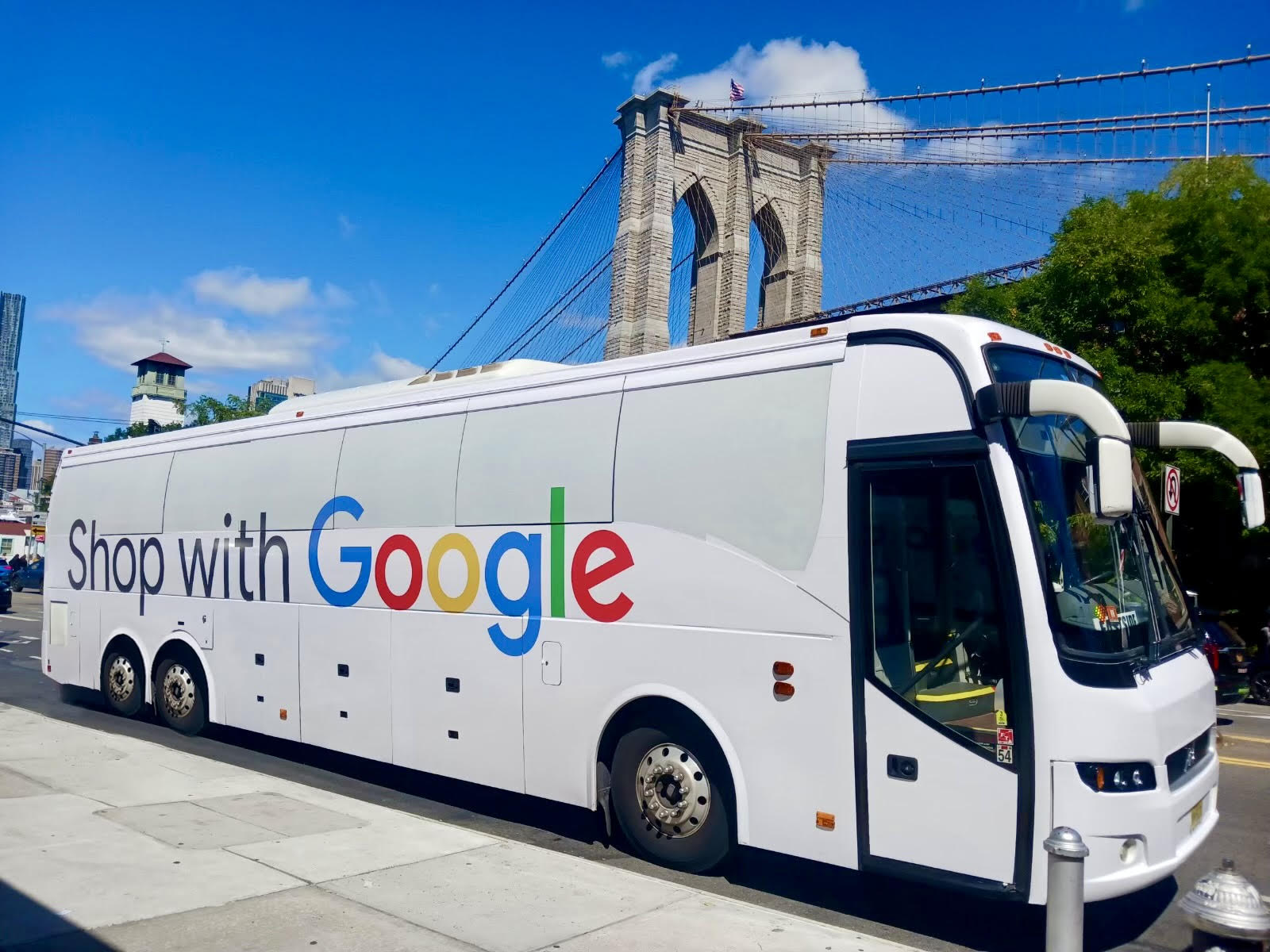
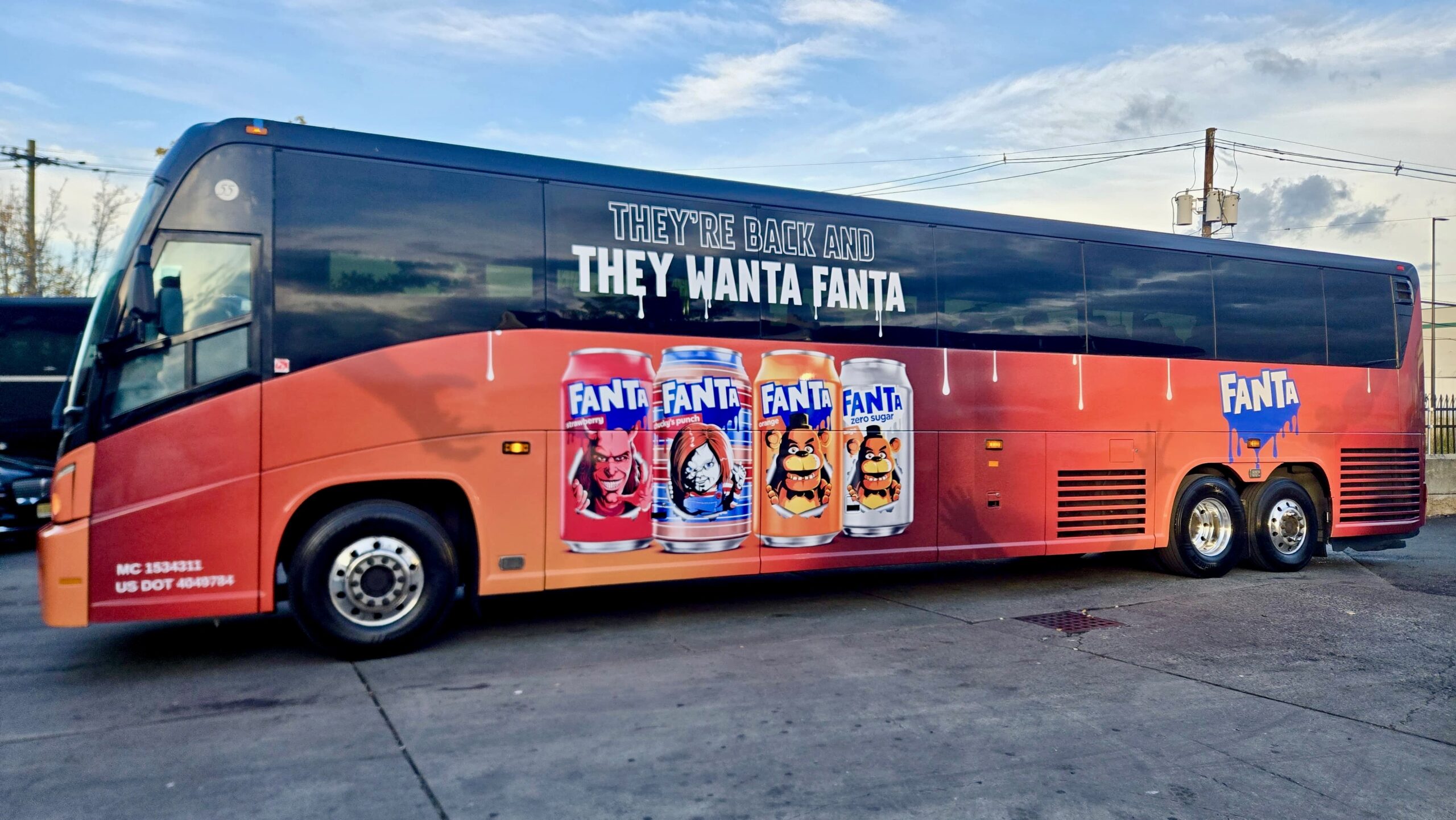
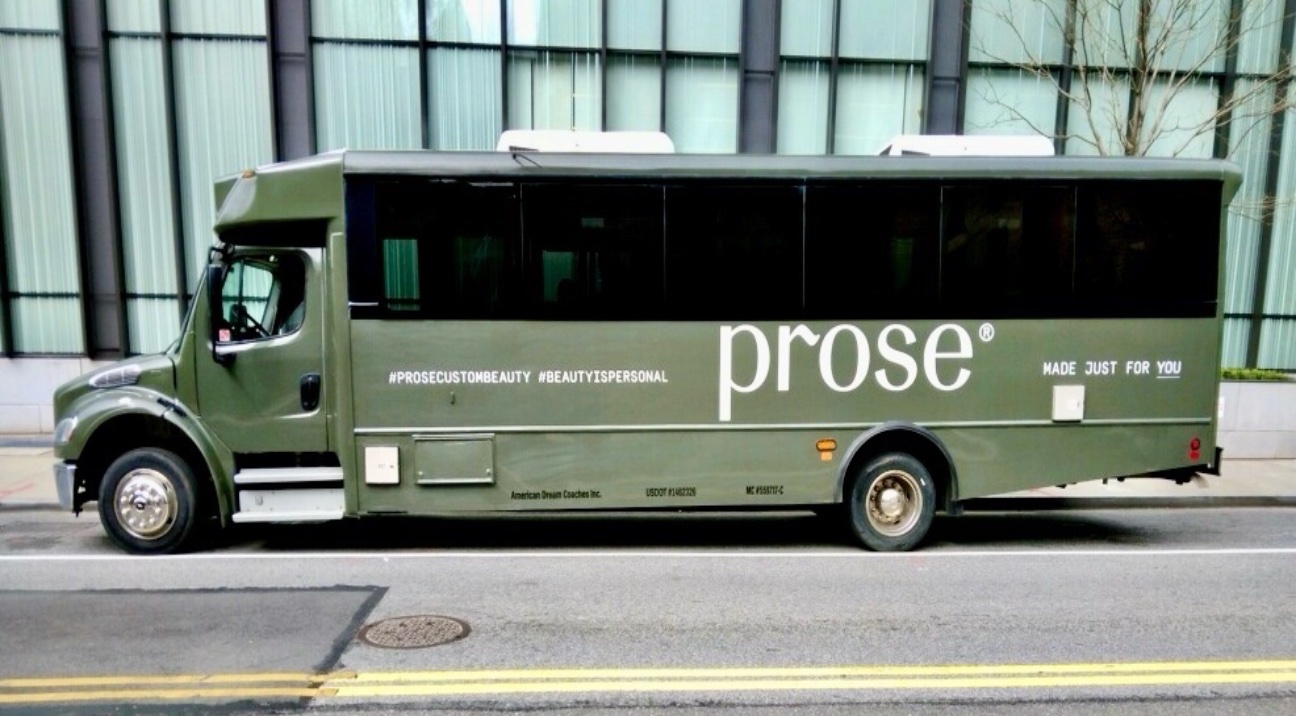
The brands that win CES understand something the rest don’t. The show floor is the most competitive real estate in the tech industry, and the streets outside it are nearly empty by comparison. A wrapped bus circling the Las Vegas Convention Center, parked outside the Venetian, and running the corridor along Paradise Road reaches the same audience with almost no competition for their attention, generating an estimated 30,000 to 70,000 impressions per day while it does so.
This guide covers how to use wrapped vehicles and branded transportation at CES: why the space between venues is the most underrated advertising opportunity at the show, how to route around the official venue map, how branded shuttles solve a genuine CES pain point while marketing you, and the timeline you need to hit if you’re targeting January.
Why CES Is Different From Every Other Trade Show:
The audience is extraordinary, and it’s all in one place
CES draws a caliber of attendee most events never see. Recent editions brought more than 55,000 international attendees from 141 countries, roughly 38% of the total, with 307 Fortune 500 companies represented and over half of attendees holding senior-level positions. Add nearly 7,000 media, content creators, and analysts covering the show, and you have the highest concentration of decision makers and press in the technology calendar.
The competition inside is brutal
More than 4,100 exhibitors fill over 2.6 million net square feet across multiple venues, including roughly 1,200 startups packed into Eureka Park alone. Booth space at CES is one of the largest line items in a company’s annual marketing budget, and it buys you a position that attendees may simply never walk past. Being at CES does not mean being seen at CES.
The show is spread across the entire city
This is the detail that creates your opportunity. CES isn’t contained in one building. The Las Vegas Convention Center is the main hub, the Venetian Expo hosts startups and Eureka Park, and Mandalay Bay, Resorts World, and ARIA host additional categories and private briefings. Venues are connected by official shuttles, the monorail, and the Vegas Loop, and moving between them takes real time: the LVCC and Venetian are about a 15-minute walk apart, and reaching Mandalay Bay by car can take 20 minutes or more.
So attendees spend hours every day in transit. On shuttles, in rideshares, walking between properties, waiting at curbs. That’s the window almost nobody is advertising into.
Why Wrapped Vehicles Work at CES:
You own the space between venues
While 4,100 exhibitors compete for attention inside the halls, the roads connecting those halls are comparatively wide open. Convention Center Drive, Paradise Road, Las Vegas Boulevard, and the Sands and Koval corridors carry the entire CES population back and forth all week. A wrapped coach working those routes is visible to the same senior executives, buyers, and journalists, except they’re standing on a curb with nothing to look at instead of scanning a wall of competing booths.
Your budget goes further outside the hall
Exhibiting at CES is expensive, and premium on-site sponsorships are priced accordingly. A wrapped vehicle is a fraction of major sponsorship spend and is not competing with everything else in the building for eye contact. For startups in Eureka Park especially, a bus with your name on it outside the Venetian creates a presence that looks far larger than your booth footprint suggests.
You don’t have to be an exhibitor at all
This is the part brands often miss. Nothing about a wrapped vehicle requires floor space, an exhibitor badge, or CTA approval to drive public streets. Companies that skipped the show floor, or couldn’t get the space they wanted, can still have a serious presence in Las Vegas during CES week. Many do exactly that.
The week is a media environment
With almost 7,000 media and creators in town looking for stories and visuals, striking vehicles get photographed. A bold wrap parked in the right place during the right hour turns into social content and occasionally press coverage, multiplying paid impressions with earned ones at no additional cost.
Branded Shuttles: Solving a Real CES Problem:
Here’s where transportation and marketing merge, and it’s the strongest play available at this show.
Venue-to-venue transit is the universal CES complaint
Ask anyone who has worked CES about the hardest part of the week, and they’ll say getting around. Official shuttles are crowded, rideshare surges hard during show hours, and distance between venues eats meeting time. Anyone who solves that problem for attendees earns genuine goodwill.
Your shuttle becomes hospitality
A branded shuttle running your clients, prospects, partners, and team between the LVCC, the Venetian, your hotel, and your evening events does three things at once: it eliminates the worst friction of their week, it gives you 15 to 20 uninterrupted minutes with them in a controlled environment, and it markets you to every person who sees the vehicle in between.
That last point matters. A shuttle doing hospitality runs is still driving CES routes all day, still parked at venue curbs, still visible to 148,000 people. The transportation budget and the marketing budget become the same budget.
The use cases that work best at CES
Client and VIP shuttles
Move your key accounts between venues, private demos, and dinners. Premium vehicles signal that you take their time seriously.
Team and booth staff transport
Keep your staff on schedule across venues without losing an hour a day to rideshare surge and traffic.
Hotel-to-venue runs
Las Vegas hotels are far from the LVCC during CES week. A shuttle from your team’s hotel makes mornings work.
After-hours and party transport
CES nights are where deals happen. A branded vehicle running your event guests safely between parties is hospitality and advertising at once.
Mobile demo space
For product categories that can’t fit a booth, or brands that want a private environment, the vehicle itself becomes the demo room: climate-controlled, quiet, and parked where the audience already is.
Where to Route and Park During CES Week:
Routing is a media plan. Here’s how the CES map breaks down.
The Las Vegas Convention Center corridor
The main hub and the highest-density target. Convention Center Drive and the surrounding approach roads carry the heaviest attendee flow of the week, particularly during morning arrival and the late afternoon exit when the halls empty at once. Park where the crowd walks and drive the loop during peak windows.
The Venetian and Sands corridor
Home to Eureka Park and thousands of startups, plus enormous foot traffic along the Strip-side entrances. High value if your audience is investors, startup ecosystem players, or media covering emerging tech.
The Strip itself
Las Vegas Boulevard during CES week is a slow-moving river of attendees, with resorts, restaurants, and nightly events along its length. Congestion here is your friend, because a crawling Strip means extended viewing time for everything on it.
Mandalay Bay and the south Strip
Less saturated with advertising than the convention corridor, and the drive time between here and the LVCC means captive audiences in vehicles for 20 minutes or more.
Hotel entrances and curbs
The overlooked placement. Every attendee starts and ends the day at a hotel entrance, and a parked wrapped vehicle at the right property during morning departure catches an audience that is standing still, awake, and looking around.
Timing beats geography
CES runs on a predictable rhythm. Morning departure between roughly 8 and 10, midday venue-hopping, a heavy exit wave in the late afternoon, and evening event traffic after 7. Plan the route hour by hour against that rhythm rather than driving the same loop all day.
Designing a Wrap That Works at CES:
One idea, six words, enormous type
You’re competing for the attention of people who have spent all day absorbing product pitches. Your wrap gets three to seven seconds. Company name, one clear value statement, and nothing else. This is not the place for feature lists.
Say what you do, not just who you are
CES attendees encounter thousands of unfamiliar brand names in a week. A name alone is forgettable. A name plus a five-word explanation of what you actually make is the difference between being noticed and being remembered.
Include your booth number
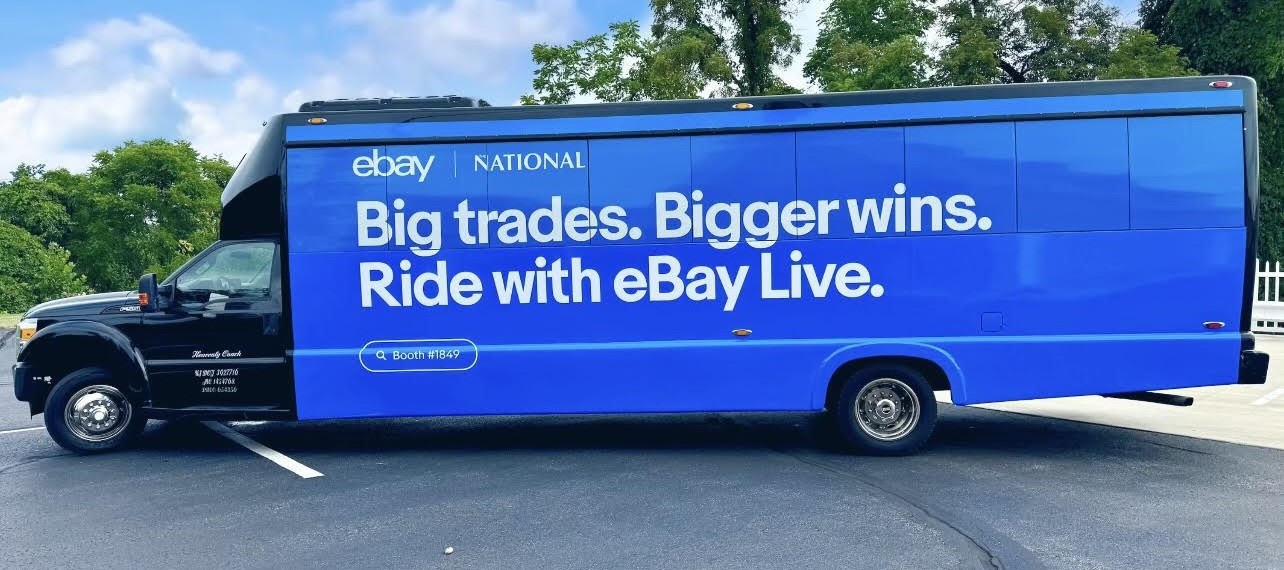
If you’re exhibiting, put your booth number and venue on the vehicle in large type. This is the single highest-converting element on a CES wrap, because it turns a passive impression into a specific action someone can take that same day.
Make it photograph well
With thousands of media and content creators in town, design for the camera as much as the eye. Bold color, clean composition, and enough contrast that a phone photo in Las Vegas sunlight still reads clearly.
Add one digital path
A short URL or a QR code on the rear panel and near the doors captures the people who want more. Out-of-home advertising drives online search at nearly four times its share of ad spend, and 46% of U.S. adults have searched for something after seeing an out-of-home ad. Give them the easy next step.
For help choosing how much of the vehicle to cover, see our guide to full wraps vs. partial wraps vs. decals, and our cost by vehicle type breakdown explains how vehicle size shapes the investment.
Choosing Your Vehicle for CES
Full-size coaches and entertainer buses
Maximum presence and the largest canvas available. Best for major brand campaigns, large team movements, and anyone who wants a vehicle that functions as a mobile venue in its own right.
Mini buses and shuttles
The CES sweet spot for most companies. Big enough to carry client groups and booth staff, small enough to maneuver the convention corridor and park at hotel entrances, and still a substantial advertising surface.
Sprinter vans
Ideal for VIP and executive movement, press pickups, and tight schedules. Easiest to park, quickest between venues, and perfectly sized for high-touch hospitality with a handful of key accounts.
Your CES 2027 Timeline:
CES 2027 opens January 6, with press days beginning January 3. Work backward from there:
| Timeframe | What Happens |
|---|---|
| 12 to 14 weeks out (early October) | Decide scope, vehicle type, and whether you’re running hospitality shuttles, advertising routes, or both |
| 10 to 12 weeks out | Reserve vehicles; Las Vegas inventory during CES week is finite and books early |
| 8 to 10 weeks out | Design wrap creative; finalize booth number and messaging |
| 6 to 8 weeks out | Approve artwork; production and printing |
| 4 to 6 weeks out | Installation with photo verification |
| 2 to 3 weeks out | Route and schedule planning, driver briefing, hospitality manifests |
| January 3 to 9 | Press days and show week: vehicle live across the city |
The hard constraint: wrap production needs roughly 3 to 6 weeks from approved design to installed vehicle, and CES week is the single highest-demand period of the year for vehicles in Las Vegas. Booking in October for a January show is comfortable. Booking in December is a scramble.
Mistakes to Avoid at CES:
- Assuming the booth is enough. With 4,100 exhibitors competing in the same halls, the brands that get noticed create presence beyond their floor space.
- Designing for a trade show hall, not a street. Fine print and dense graphics that work on a booth panel are invisible from a passing lane.
- Forgetting the booth number. If you’re exhibiting, it’s the most actionable thing you can put on a vehicle, and it’s the element most commonly left off.
- Driving a single loop all day. CES moves in waves. A route that ignores the morning departure and late afternoon exit wastes the highest-value hours.
- Booking late. Vehicle availability in Las Vegas during CES week is genuinely limited, and production timelines don’t compress past a point.
- Ignoring the parked hours. The vehicle sitting at a venue curb during peak foot traffic may deliver more value than the miles it drives.
FAQ: CES Bus Wrap Advertising and Branded Transportation:
When is CES 2027?
CES 2027 runs January 6 to 9, 2027, across multiple Las Vegas venues including the Las Vegas Convention Center, the Venetian Expo, Mandalay Bay, Resorts World, and ARIA. Press and media days begin January 3.
Do I need to be a CES exhibitor to advertise with a wrapped bus?
No. Wrapped vehicles operate on public streets and don’t require floor space or exhibitor status. Companies that aren’t exhibiting frequently use this to establish a presence during show week, and exhibitors use it to extend their reach beyond the hall.
How much does the CES bus wrap advertising cost?
It depends on the vehicle, coverage level, and how many days you run, which is why we publish transparent starting estimates instead of vague ranges. See our bus wrap cost by vehicle type guide, then contact us for a quote built around your CES plan.
How far in advance should I book for CES?
Start 12 to 14 weeks out. Wrap production takes roughly 3 to 6 weeks from approved art, and Las Vegas vehicle availability during CES week is the tightest of the year. October planning for a January show is the comfortable window.
Can the same vehicle do hospitality and advertising?
Yes, and that’s the strongest use of the budget. A wrapped shuttle moving your clients and team between venues is advertising to the entire city between every run. One vehicle, one cost, two returns.
What should go on a CES wrap?
Company name, a five-word explanation of what you do, your booth number and venue if you’re exhibiting, and one digital path such as a short URL or QR code. Everything else competes with those four elements.
Can you provide both the vehicles and the wrap?
Yes. We supply the fleet, from sprinter vans to full-size entertainer coaches, wrap them in your campaign creative, and handle routing and logistics for the full week. One partner instead of coordinating a charter company and a print shop separately.
Conclusion:
CES puts 148,000 of the most valuable people in technology into one city for four days, then makes 4,100 companies fight over their attention inside the same buildings. The smartest brands stop fighting that battle and take the empty ground instead: the streets, the curbs, the shuttle rides, and the hours attendees spend getting from one venue to the next.
A wrapped vehicle owns that space. It moves your clients and your team, it advertises to the entire show population between runs, and it works whether you have a booth or not. With CES 2027 opening January 6 and production needing weeks of lead time, the decision window is now, not December.
Own Las Vegas During CES Week:
We provide the fleet and the wraps together, from sprinter vans for executive runs to full-size entertainer coaches for major brand presence, and we handle design, printing, installation, routing, and show-week logistics end to end. Las Vegas inventory during CES is limited and moves early. See real campaigns in our case studies, then get a free quote or call 888-646-6660. Tell us your goals, your booth location, and your guest list, and we’ll build the CES plan around them.
Sources: CES attendance, exhibitor, venue, and media figures from CTA independently audited CES data and published CES 2027 event information; search activation data from Nielsen’s OOH Online Activation Survey; impression figures are industry estimates and vary by route and schedule. CES and Consumer Electronics Show are trademarks of the Consumer Technology Association. Bus Wrap Inc is not affiliated with or endorsed by CTA.